
Advantages of Waterjet Cutting Over Traditional Cutting
Waterjet cutting has become one of the most valuable technologies in modern manufacturing, offering a level of flexibility and precision that many traditional cutting methods cannot achieve. As industries demand higher-quality products, shorter production cycles, and greater material versatility, manufacturers are increasingly replacing conventional cutting processes with advanced waterjet systems. Whether producing aerospace components, automotive parts, architectural stone, or industrial machinery, companies are discovering that a waterjet cutting machine provides distinct advantages in terms of accuracy, efficiency, and long-term operating costs.
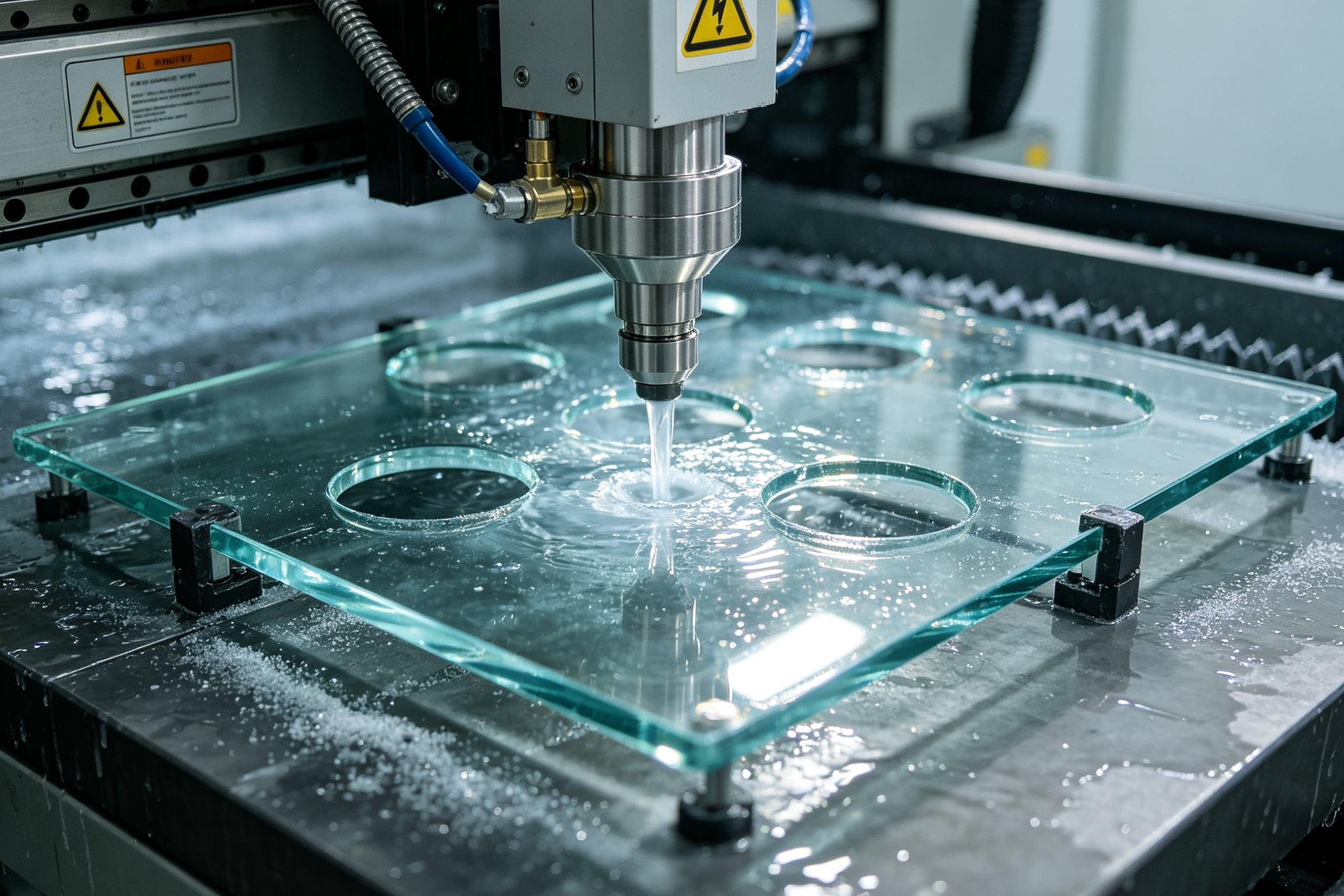
Unlike conventional cutting technologies that rely on heat or direct mechanical contact, waterjet cutting uses an ultra-high-pressure stream of water, often mixed with garnet abrasive, to erode material cleanly. Because the process is cold and non-contact, it preserves the original properties of the material while producing smooth, accurate cuts across an extensive range of materials. These unique characteristics have made waterjet cutting an increasingly popular solution for manufacturers looking to improve product quality while reducing waste and production complexity.
What Is Waterjet Cutting?
Waterjet cutting is a precision manufacturing process that uses water pressurized to as much as 90,000 PSI to cut through materials. When machining softer materials such as rubber, foam, or plastics, pure water is sufficient. For harder materials—including stainless steel, aluminum, titanium, glass, ceramics, and natural stone—abrasive particles are added to the water stream, creating a powerful cutting tool capable of processing even extremely thick workpieces.
One of the defining characteristics of waterjet technology is that it removes material through erosion rather than melting, burning, or mechanical shearing. This means the cutting process generates virtually no heat, making it fundamentally different from laser, plasma, or flame cutting. As a result, manufacturers can achieve excellent cutting quality without exposing materials to thermal stress or distortion.
Why Traditional Cutting Methods Have Limitations
Traditional cutting technologies continue to play an important role in manufacturing, but each method comes with limitations that can affect productivity and product quality. Mechanical cutting processes such as sawing, milling, and drilling require direct contact between the cutting tool and the workpiece. Continuous friction leads to tool wear, increased maintenance costs, and the possibility of mechanical deformation, particularly when machining delicate or thin materials.
Thermal cutting methods, including laser cutting, plasma cutting, and oxy-fuel cutting, remove material by generating extremely high temperatures. While these technologies are highly efficient for many applications, the heat they produce often creates heat-affected zones (HAZ), which can alter the physical properties of the surrounding material. Warping, discoloration, oxidation, and residual stress frequently require additional finishing processes before components can move to the next stage of production.
As manufacturing standards continue to rise, these challenges have encouraged more companies to adopt cutting technologies that provide greater consistency, higher precision, and lower overall production costs.
Superior Material Versatility
Perhaps the greatest advantage of a waterjet cutting machine is its ability to process an extraordinary variety of materials using a single system. Unlike many conventional cutting technologies that are optimized for only certain materials or thicknesses, waterjet cutting can handle metals, composites, ceramics, stone, glass, plastics, rubber, foam, and even laminated materials without changing the fundamental cutting process.
This versatility provides manufacturers with greater production flexibility. Instead of investing in multiple cutting machines for different materials, companies can consolidate production using one waterjet system. This simplifies workflow management, reduces equipment investment, and enables manufacturers to respond more quickly to changing customer requirements or custom orders.
Cold Cutting Preserves Material Integrity
One of the primary reasons manufacturers choose waterjet technology is its cold cutting capability. Since so much heat is not generated during processing, the material retains its original structural and mechanical properties throughout the cutting operation. There is no melting, burning, hardening, or thermal distortion, even when machining heat-sensitive alloys or advanced composite materials.
This advantage is especially valuable in industries where material performance is critical. Aerospace components, medical devices, precision engineering parts, and high-performance composites often require strict control over material properties. Waterjet cutting allows these components to be manufactured without introducing thermal damage, ensuring higher product reliability and reducing the possibility of costly post-processing.
Outstanding Precision and Edge Quality
Modern CNC waterjet systems deliver exceptional cutting accuracy thanks to advanced motion control systems, intelligent software, and stable high-pressure pumps. The narrow cutting stream enables manufacturers to produce fancy geometries, sharp internal corners, and complex contours with remarkable consistency.
In addition to dimensional accuracy, waterjet cutting produces clean, smooth edges that often require little or no secondary finishing. Unlike plasma or flame cutting, which may leave slag or rough edges, waterjet technology creates high-quality surfaces that are ready for assembly or further processing. Eliminating grinding, polishing, and deburring operations not only reduces labor costs but also shortens production lead times.
Reduced Material Waste and Lower Production Costs
As raw material prices continue to increase, improving material utilization has become a priority for manufacturers worldwide. Waterjet cutting contributes greatly to cost savings through its narrow kerf width and excellent nesting capability. Because less material is removed during cutting, components can be positioned closer together on the workpiece, maximizing material usage and reducing scrap.
The precision of CNC-controlled waterjet systems also minimizes cutting errors and rejected parts. Combined with reduced secondary processing and lower tooling costs, these efficiencies contribute to a lower total cost of ownership over the life of the equipment. For manufacturers processing expensive materials such as titanium, stainless steel, or natural stone, these savings can have a substantial impact on profitability.
Ability to Cut Thick and Complex Materials
Waterjet cutting is particularly well suited for applications involving thick or difficult-to-machine materials. While laser cutting performance may decrease clearly as material thickness increases, abrasive waterjet technology maintains excellent cutting capability across a wide range of thicknesses without sacrificing edge quality.
Its highly focused cutting stream also makes it possible to manufacture tricky shapes and complex components that would be difficult to achieve using conventional cutting equipment. This capability has made waterjet technology a preferred solution for custom fabrication, architectural decoration, precision engineering, and prototype development, where design flexibility is often just as important as production efficiency.
Environmentally Friendly Manufacturing
Sustainability is becoming an increasingly important consideration in industrial production, and waterjet cutting supports many environmentally responsible manufacturing practices. Since the process does not rely on combustion or extremely high temperatures, it generates no toxic fumes, smoke, or hazardous gases during operation. This creates a cleaner and safer working environment for machine operators while reducing complex ventilation systems.
Besides, waterjet cutting produces relatively little waste, and many facilities incorporate water filtration and recycling systems to minimize water consumption. When combined with efficient material utilization and reduced secondary processing, these environmental benefits help manufacturers meet both operational and sustainability goals.
Why More Manufacturers Are Choosing Waterjet Cutting
The growing adoption of waterjet technology reflects the changing priorities of modern manufacturing. Companies are no longer focused solely on cutting speed; they also require precision, flexibility, consistent quality, and lower operating costs. Waterjet cutting successfully balances these requirements by offering a single solution capable of processing a broad range of materials while maintaining exceptional accuracy and preserving material integrity.
Whether producing precision metal parts, stone countertops, composite panels, or industrial machinery components, manufacturers benefit from improved production efficiency, higher-quality finished products, and greater flexibility to handle custom projects. As automation and CNC technologies continue to evolve, waterjet cutting systems are becoming even more productive and easier to integrate into smart manufacturing environments.
Conclusion
Compared with traditional cutting methods, waterjet cutting offers clear advantages in virtually every aspect of modern manufacturing. Its cold cutting process eliminates heat-affected zones, preserves material properties, minimizes waste, and delivers exceptional precision across an extensive range of materials. The ability to produce clean edges with little secondary processing further reduces production costs while improving overall efficiency.
For manufacturers seeking a reliable, versatile, and future-ready cutting solution, investing in a high-performance waterjet cutting machine is a strategic decision that delivers long-term value. As industries continue to pursue higher quality standards and more sustainable production methods, waterjet cutting will remain one of the most effective technologies for achieving precision manufacturing and maintaining a competitive advantage.
Recent Posts
- Invitation | DEFA TECHNOLOGY invites you to visit
- Foshan DEFA Technology Co., Ltd invites you to participate in the GLASSTEC Düsseldorf Glass Fair in Germany in 2024
- Foshan DEFA Technology Co., Ltd invites you to participate in the Glasstech Asia & Fenestration Asia in Indonesia in 2025
- Hannover MESse Shanghai 2024
- Cutting product display
SUBSCRIBE
INQUIRY