
Cold Cutting vs Thermal Cutting Methods: Which Cutting Technology Is Right for Your Business?
Manufacturing technology continues to evolve as businesses demand greater precision, higher efficiency, and improved material utilization. Among the many fabrication processes available today, cutting technology remains one of the most important factors influencing product quality and production costs. Whether manufacturing aerospace components, architectural stone, automotive parts, or industrial equipment, choosing the right cutting method can impact the final result.
Industrial cutting technologies generally fall into two categories: cold cutting and thermal cutting. Thermal methods, including laser, plasma, and oxy-fuel cutting, have long been used for high-speed metal fabrication. In contrast, cold cutting technologies remove material without exposing it to excessive heat, helping preserve its original properties. Among all cold cutting solutions, the waterjet equipment has become one of the most versatile and reliable choices for manufacturers working with a wide range of materials.
Understanding the differences between these cutting methods can help businesses invest in equipment that matches their production goals while improving efficiency and reducing unnecessary processing costs.
What Is Cold Cutting?
Cold cutting refers to machining processes that separate materials without generating a clear heat-affected zone. Instead of melting or burning the workpiece, these technologies rely on mechanical force or erosion to remove material while keeping temperatures low. Because the material is not exposed to intense heat, its physical properties, hardness, and structural integrity remain unchanged throughout the cutting process.
A CNC waterjet cutting machine is one of the most advanced examples of cold cutting technology. It uses ultra-high-pressure water, often mixed with abrasive particles such as garnet, to erode material with exceptional precision. This process produces clean, accurate cuts without causing thermal distortion, discoloration, or microcracks. Since no heat is introduced into the workpiece, manufacturers can process heat-sensitive materials with confidence while maintaining excellent dimensional accuracy.
Cold cutting is particularly valuable in industries where material quality cannot be compromised. Aerospace manufacturers, medical equipment producers, stone fabricators, and precision engineering companies frequently choose waterjet technology because it preserves the original characteristics of every component while reducing secondary finishing.
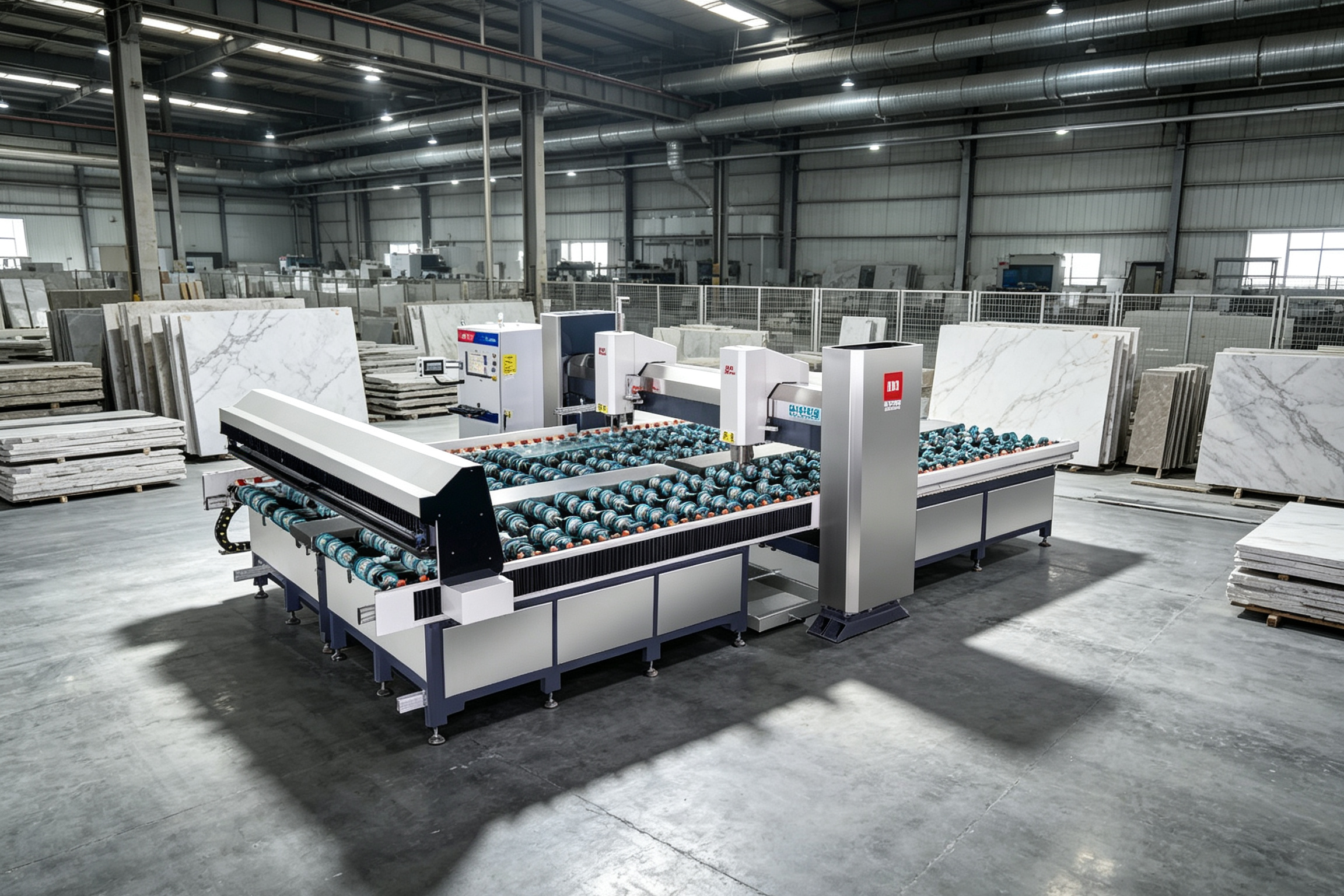
What Are Thermal Cutting Methods?
Thermal cutting technologies remove material by applying concentrated heat to melt, burn, or vaporize the workpiece. The most common methods include laser cutting, plasma cutting, and oxy-fuel cutting, each designed for different applications and material thicknesses.
Laser cutting is widely recognized for its speed and precision when processing thin and medium-thickness sheet metal. A focused laser beam creates narrow kerfs and smooth edges, making it a popular solution for electronics, automotive components, and precision sheet metal fabrication. However, the intense heat generated during the process inevitably creates a heat-affected zone around the cut edge.
Plasma cutting uses an electrically conductive gas that is heated into plasma to cut conductive metals. It offers excellent cutting speeds for thicker steel plates and is commonly used in heavy manufacturing and structural fabrication. Oxy-fuel cutting, meanwhile, relies on oxygen and fuel gases to burn through carbon steel, making it a cost-effective option for very thick steel sections. Although both technologies are highly productive, they also generate a great amount of heat that may alter the material's mechanical properties.
Heat-Affected Zone: The Biggest Difference
The most notable distinction between cold cutting and thermal cutting is the presence of a heat-affected zone (HAZ). During thermal cutting, temperatures rise dramatically around the cutting area, changing the microstructure of the material. Depending on the material and cutting conditions, this can lead to hardening, oxidation, warping, residual stress, or surface discoloration.
These thermal effects often require additional processing such as grinding, polishing, machining, or heat treatment before the finished component is ready for assembly. For high-precision parts, these extra operations increase production time and manufacturing costs.
A professional waterjet machine eliminates this concern because it performs true cold cutting. Since virtually no heat enters the workpiece, the original material properties remain intact from edge to edge. This makes waterjet technology especially suitable for materials that cannot tolerate thermal damage, including titanium alloys, composite materials, ceramics, glass, and natural stone.
Precision and Edge Quality
High-quality edge finishes are essential for manufacturers seeking to reduce downstream processing. The quality of the cut directly influences assembly accuracy, product appearance, and production efficiency.
A waterjet cutter machine produces smooth, clean edges without burrs, melting, or burning. The absence of thermal stress allows delicate materials to maintain their dimensional stability while minimizing deformation. As a result, many components can move directly to assembly without additional finishing, reducing labor costs and shortening production cycles.
Laser cutting also delivers impressive precision, particularly on thin sheet metal, but slight oxidation or hardened edges may occur depending on the material and cutting parameters. Plasma and oxy-fuel cutting generally produce wider kerfs and rougher surfaces, making secondary finishing more common. For manufacturers prioritizing precision across a wide variety of materials, cold cutting often provides the most consistent results.
Material Versatility
Material flexibility is another important factor when selecting industrial cutting equipment. Modern manufacturers increasingly work with multiple materials rather than focusing on a single product line, making versatile machinery a valuable investment.
One of the greatest strengths of a waterjet machine is its ability to cut almost any material. From stainless steel, aluminum, and titanium to marble, granite, porcelain, ceramics, carbon fiber, glass, plastics, rubber, and foam, waterjet systems can process an exceptionally diverse range of materials using the same equipment. This versatility allows manufacturers to expand production capabilities without purchasing multiple specialized cutting machines.
Thermal cutting technologies are generally more material-specific. Laser cutting performs exceptionally well on metals but is less suitable for certain reflective materials and heat-sensitive products. Plasma cutting is limited to electrically conductive metals, while oxy-fuel cutting is primarily used for carbon steel. Businesses handling diverse manufacturing projects often find that a waterjet system provides greater operational flexibility and long-term value.
Efficiency, Cost, and Sustainability
When evaluating cutting technologies, manufacturers should consider the total cost of ownership rather than focusing solely on equipment price. Initial investment, operating expenses, maintenance requirements, material utilization, and labor costs all contribute to long-term profitability.
Although abrasive consumption is part of operating an industrial waterjet cutting machine, many manufacturers recover these costs through reduced material waste, fewer rejected parts, and greatly lower finishing requirements. Since waterjet cutting minimizes thermal distortion, more components meet quality standards on the first pass, improving production efficiency and reducing scrap rates.
Environmental considerations also favor cold cutting technology. Waterjet systems generate no toxic fumes, smoke, or burning gases during operation, creating a cleaner and safer working environment. Thermal cutting processes typically require ventilation systems, fume extraction equipment, and additional safety measures to manage sparks and high temperatures. As sustainability becomes a higher priority for manufacturers worldwide, the environmental advantages of waterjet technology continue to gain importance.
Why More Manufacturers Choose a Waterjet Machine
The manufacturing industry increasingly demands equipment that combines precision, flexibility, and reliability. A precision waterjet machine meets these expectations by providing one cutting solution capable of processing a wide variety of materials while maintaining outstanding edge quality and dimensional accuracy.
For industries such as aerospace, automotive, architecture, stone fabrication, medical manufacturing, and industrial machinery, preserving material integrity is often more valuable than achieving the highest possible cutting speed. Waterjet technology allows manufacturers to process complex geometries, fancy patterns, and thick materials without introducing thermal stress that could compromise product performance.
Another important advantage is production flexibility. As market demands change, manufacturers can quickly switch between different materials and product types without replacing equipment or investing in multiple cutting systems. This adaptability helps businesses respond to customer requirements more efficiently while maximizing equipment utilization and return on investment.
Conclusion
Both cold cutting and thermal cutting technologies have important roles in modern manufacturing. Laser, plasma, and oxy-fuel cutting offer excellent productivity for specific metal fabrication applications, particularly when speed is the primary objective. However, these methods inevitably introduce heat that can alter material properties and increase post-processing requirements.
For manufacturers seeking superior precision, exceptional material versatility, and consistent cutting quality, a CNC water jet machine provides a highly effective cold cutting solution. By eliminating the heat-affected zone while delivering clean edges across metals, stone, glass, ceramics, composites, and plastics, waterjet technology helps improve product quality, reduce secondary operations, and support more sustainable manufacturing practices.
As production standards continue to rise, investing in advanced cold cutting technology enables manufacturers to enhance efficiency, protect valuable materials, and remain competitive in an increasingly demanding global market.
Frequently Asked Questions
What is the main advantage of a waterjet machine over thermal cutting?
A waterjet machine cuts materials without generating heat, eliminating the heat-affected zone and preventing warping, oxidation, or changes to the material's mechanical properties.
Can a waterjet machine cut materials other than metal?
Yes. Waterjet machines can cut metals, stone, ceramics, glass, composites, plastics, rubber, foam, and many other materials using the same cutting system.
Is laser cutting faster than waterjet cutting?
Laser cutting is generally faster for thin sheet metal. However, waterjet cutting offers greater versatility, superior edge quality, and the ability to process heat-sensitive materials without thermal damage.
Which industries benefit most from waterjet cutting?
Industries such as aerospace, automotive, stone fabrication, architecture, medical manufacturing, electronics, and precision engineering frequently use waterjet machines because they require high accuracy and excellent material integrity.
How does a waterjet machine improve manufacturing efficiency?
By producing clean cuts with minimal thermal distortion, reducing secondary finishing, minimizing material waste, and handling multiple materials on one machine, waterjet systems help manufacturers improve productivity and lower overall production costs.
Recent Posts
- Invitation | DEFA TECHNOLOGY invites you to visit
- Foshan DEFA Technology Co., Ltd invites you to participate in the GLASSTEC Düsseldorf Glass Fair in Germany in 2024
- Foshan DEFA Technology Co., Ltd invites you to participate in the Glasstech Asia & Fenestration Asia in Indonesia in 2025
- Hannover MESse Shanghai 2024
- Cutting product display
SUBSCRIBE
INQUIRY