
Cutting Stone with Water Jet: A Complete Guide for Fabricators
Introduction: The Evolution of Stone Cutting Technology
Stone has been one of the most important materials in architecture, construction, and interior design for centuries. From elegant marble floors and granite countertops to custom stone walls and decorative patterns, natural and engineered stone continues to be widely used in residential and commercial projects. However, as design requirements become more complex, traditional stone cutting methods often struggle to meet the growing demand for precision, flexibility, and efficiency.
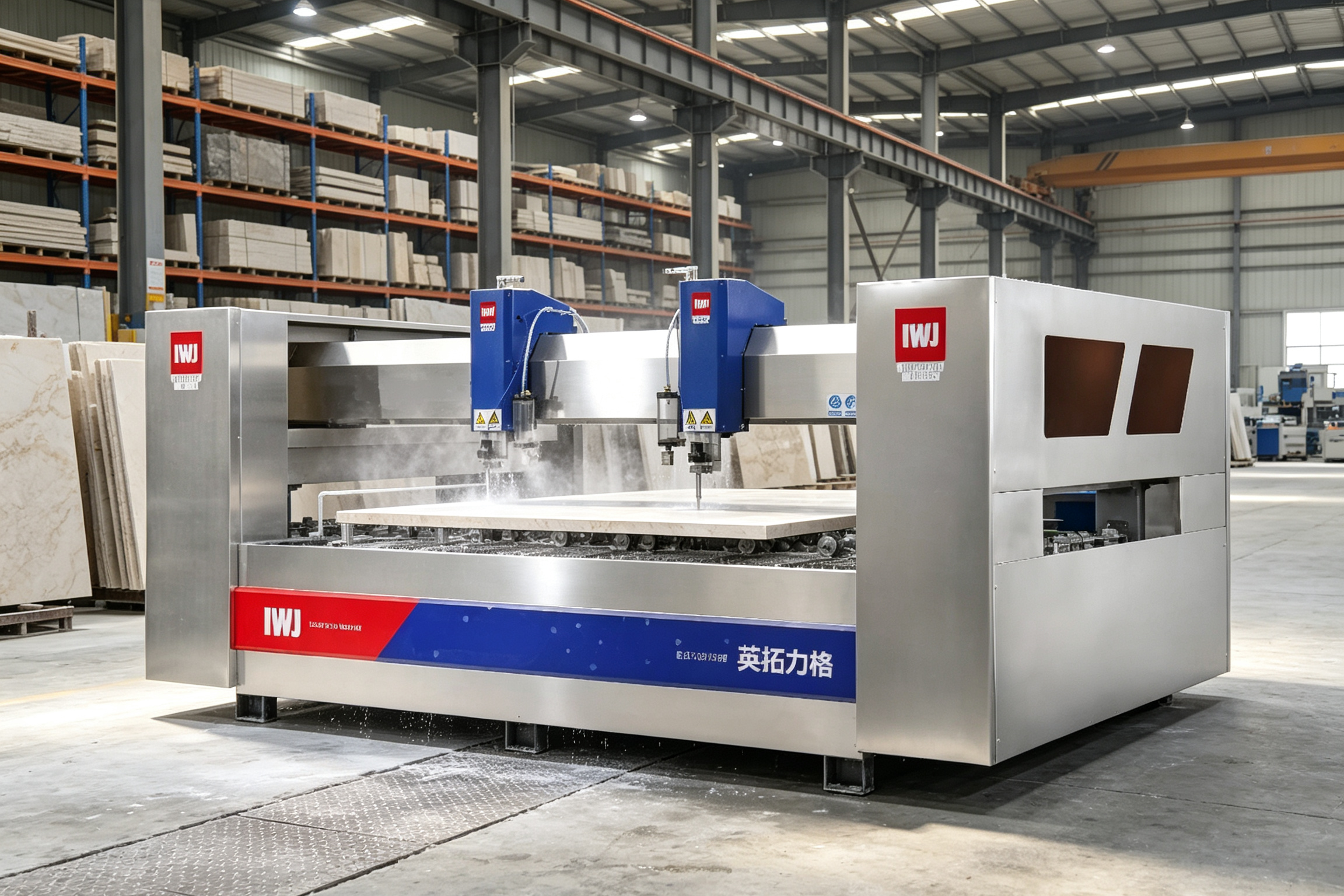
Cutting stone with water jet technology has become an advanced solution for modern stone fabricators. By using an ultra-high-pressure water stream combined with abrasive materials, water jet cutting machines can process various types of stone with exceptional accuracy and minimal damage. This technology allows manufacturers to create complex shapes, smooth edges, and customized designs while reducing material waste and improving production efficiency.
For fabricators looking to upgrade their stone processing capabilities, water jet cutting provides a reliable and versatile method that meets the needs of today’s demanding market.
What Is Cutting Stone with Water Jet Technology?
Water jet stone cutting is a cold cutting process that uses a high-pressure water stream to cut through hard materials. When processing stone, abrasive particles such as garnet are added to the water stream to increase cutting power. The mixture creates a focused cutting force capable of slicing through materials including granite, marble, quartz, limestone, and porcelain stone slabs.
Unlike traditional cutting methods that depend on physical blades or mechanical pressure, water jet cutting removes material through high-speed erosion. Because there is no direct contact between a cutting tool and the stone surface, the process generates less vibration and mechanical stress, helping protect delicate materials from cracking, chipping, or structural damage.
Modern CNC water jet cutting machines use computer-controlled systems to follow digital designs with high precision. Fabricators can easily produce straight cuts, curves, detailed patterns, and customized shapes, making water jet technology ideal for both standard production and specialized stone projects.
Why Water Jet Cutting Is Ideal for Stone Fabrication
One of the most outstanding advantages of cutting stone with a water jet is its exceptional precision. Stone fabrication often requires extremely accurate dimensions, especially for applications such as countertops, architectural panels, and decorative installations. A small cutting error can result in expensive material loss or additional processing time.
With CNC-controlled water jet systems, fabricators can achieve consistent cutting accuracy across different projects. The machine follows programmed designs with minimal deviation, allowing manufacturers to produce complicated geometries and fancy patterns that are difficult to achieve with conventional tools.
This capability is especially valuable for custom stone applications, where designers often require unique shapes, artistic patterns, and detailed surface layouts. Water jet technology gives fabricators the flexibility to turn creative concepts into precise finished products.
Cold Cutting Process Protects Stone Quality
Heat generation is a common challenge in many traditional cutting processes. Saw blades and other mechanical tools can create friction and heat during operation, which may affect the appearance and structural integrity of certain stone materials.
Water jet cutting eliminates this issue because it is a cold cutting method. The process does not create a heat-affected zone, meaning there is no thermal stress, discoloration, or heat-related cracking. This makes water jet cutting particularly suitable for premium materials such as marble, quartz, and engineered stone.
For high-end stone fabrication, maintaining the natural appearance of the material is essential. Water jet technology helps preserve the original texture, color, and quality of stone while delivering clean and accurate cuts.
Cutting Different Types of Stone Materials with Water Jet
One of the reasons water jet cutting has become popular among fabricators is its ability to process a wide range of stone materials.
Marble is commonly used in luxury interiors, flooring, walls, and decorative applications. Although marble offers a beautiful appearance, it can be sensitive to excessive force and heat. Water jet cutting provides a safer solution by creating smooth cuts without damaging the surface.
Granite is another widely used material known for its hardness and durability. Traditional cutting methods may require much effort when processing thick granite slabs, while abrasive water jet systems can cut through granite efficiently with excellent edge quality.
Quartz and engineered stone are also suitable for water jet processing. These materials are popular in modern kitchens and commercial spaces because of their durability and aesthetic appeal. Water jet technology allows fabricators to achieve precise dimensions while reducing the risk of chips and cracks.
In addition, large-format porcelain stone slabs have become increasingly popular in contemporary architecture. Due to their size and relatively thin structure, they require advanced cutting methods. Water jet machines provide the accuracy needed for porcelain applications while minimizing edge damage.
Water Jet Cutting Reduces Material Waste
For stone fabricators, material efficiency directly affects production costs. Natural stone slabs can be expensive, and unnecessary waste can greatly reduce profitability. Water jet cutting helps maximize material usage through precise cutting paths and advanced nesting software.
CNC water jet systems allow operators to arrange multiple parts within a single slab before cutting. This optimization reduces leftover material and improves overall production efficiency. Compared with manual cutting methods, digital programming provides better control over material utilization.
Reducing waste is also becoming increasingly important as manufacturers focus on sustainable production practices. By improving material efficiency, water jet cutting supports both economic and environmental goals.
Applications of Water Jet Stone Cutting
Water jet cutting technology is widely used across various stone fabrication industries. In residential projects, it is commonly applied to kitchen countertops, bathroom surfaces, staircases, and custom flooring designs. Fabricators can create precise openings for sinks, appliances, and other components while maintaining excellent edge quality.
In commercial and architectural projects, water jet cutting enables the production of decorative stone panels, hotel interiors, shopping center flooring, and artistic installations. Designers can create unique patterns and customized stone elements that enhance the visual appeal of a space.
The technology is also widely used for stone mosaics and inlay designs. Complex geometric patterns, logos, and decorative elements can be accurately cut from different stone materials and assembled into customized designs.
Water Jet Cutting vs Traditional Stone Cutting Methods
Traditional stone cutting equipment, such as bridge saws and manual cutting tools, remains useful for basic applications. However, these methods often have limitations when dealing with complex designs or customized production requirements.
Saw cutting is generally effective for straight cuts but has difficulty creating detailed curves and artistic patterns. It may also generate more dust, vibration, and edge finishing requirements.
Water jet cutting provides greater flexibility because it can handle both simple and complex designs without changing cutting tools. It offers smoother edges, better accuracy, and the ability to process multiple materials using the same equipment.
For modern fabricators focusing on customization and high-quality results, water jet technology provides a more advanced and efficient alternative.
How to Choose the Right Water Jet Cutting Machine for Stone
Choosing the right water jet cutting machine is an important decision for stone fabricators. The machine should match the production requirements, material types, and project scale of the business.
Cutting size is one of the first factors to consider. Fabricators working with large stone slabs should select equipment with a suitable cutting table size to handle oversized materials.
The performance of the high-pressure pump is another important consideration. A powerful and reliable pump ensures efficient cutting performance, especially when processing thick or dense stone materials.
The CNC control system and software capabilities also influence productivity. Advanced software allows easier programming, better nesting optimization, and improved production management.
In addition, manufacturers should consider equipment durability, maintenance requirements, and after-sales support. A reliable supplier can help ensure long-term machine performance and reduce operational downtime.
The Future of Stone Fabrication with Water Jet Technology
As the demand for customized stone products continues to grow, water jet cutting will play an increasingly important role in the future of stone fabrication. The combination of digital design, CNC automation, and precision cutting allows manufacturers to produce more creative and complex stone solutions.
Modern customers expect unique designs, faster delivery times, and higher quality standards. Water jet technology helps fabricators meet these expectations by improving accuracy, reducing waste, and expanding production possibilities.
With continued advancements in automation and manufacturing technology, water jet cutting will remain a key solution for companies seeking efficient and flexible stone processing methods.
Conclusion
Cutting stone with water jet technology offers a powerful combination of precision, efficiency, and versatility for modern fabricators. Compared with traditional cutting methods, water jet systems provide cleaner edges, reduced material waste, and greater design flexibility.
Whether producing marble countertops, granite panels, porcelain slabs, or custom decorative stone products, water jet cutting enables manufacturers to achieve high-quality results while improving production efficiency. For stone fabrication businesses looking to stay competitive in a changing market, investing in CNC water jet technology is a smart choice for future growth.
Recent Posts
- Invitation | DEFA TECHNOLOGY invites you to visit
- Foshan DEFA Technology Co., Ltd invites you to participate in the GLASSTEC Düsseldorf Glass Fair in Germany in 2024
- Foshan DEFA Technology Co., Ltd invites you to participate in the Glasstech Asia & Fenestration Asia in Indonesia in 2025
- Hannover MESse Shanghai 2024
- Cutting product display
SUBSCRIBE
INQUIRY