
How CNC Water Jet Cutting Enhances Manufacturing Efficiency
Manufacturers today are under constant pressure to produce high-quality products faster while controlling production costs. As customer expectations continue to rise, companies must adopt advanced manufacturing technologies that improve precision, reduce waste, and increase overall productivity. Among the many cutting technologies available, CNC water jet cutting has become one of the most efficient and versatile solutions for modern manufacturing. Its ability to process a wide range of materials without heat distortion makes it an ideal choice for industries that demand both accuracy and flexibility.
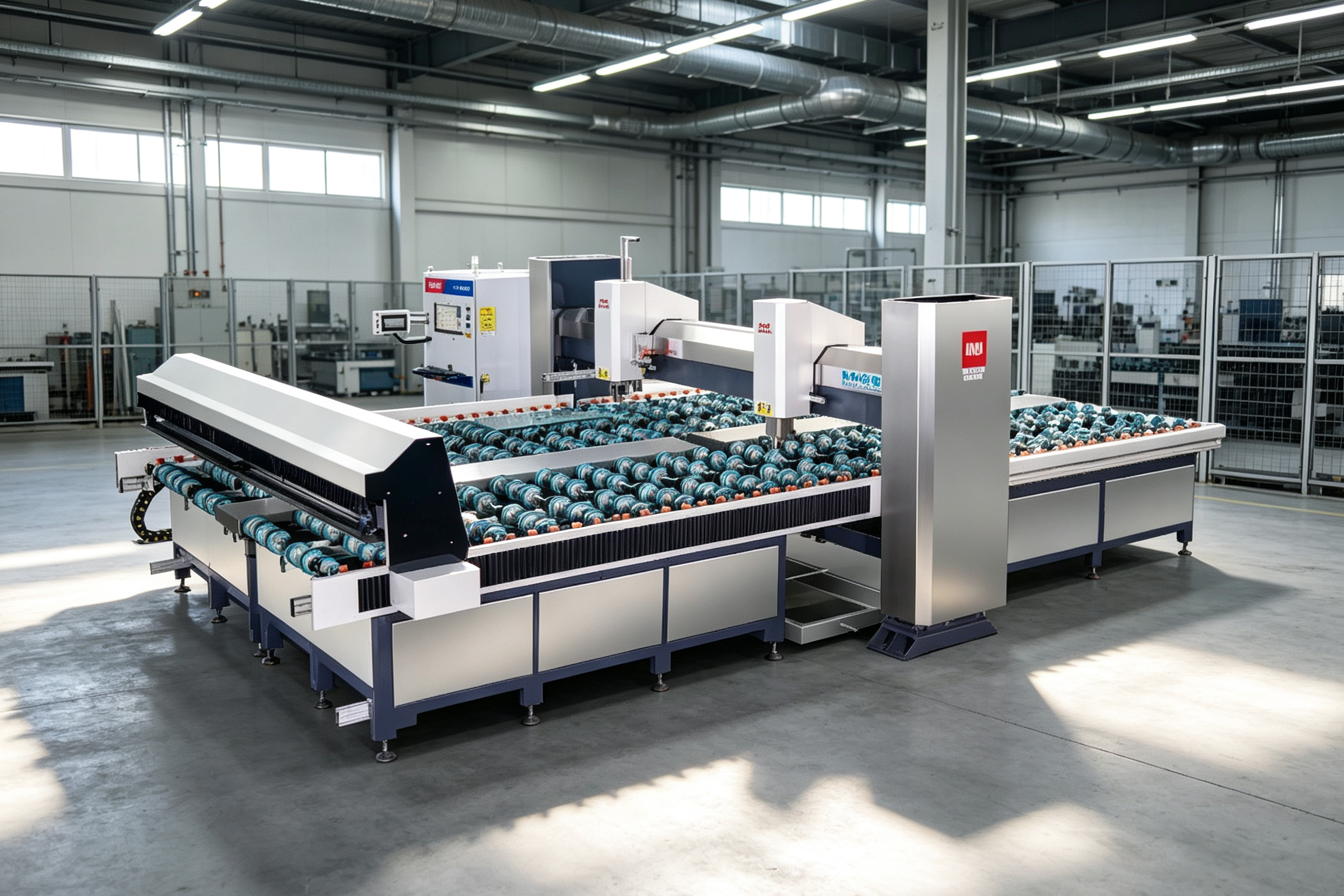
Unlike conventional cutting methods that rely on heat, CNC water jet cutting uses an ultra-high-pressure stream of water, often mixed with abrasive garnet, to cut materials with exceptional precision. Controlled by advanced CNC software, the system follows digital CAD designs to produce complex shapes with minimal operator intervention. This combination of precision engineering and intelligent automation enables manufacturers to simplify production while maintaining consistent quality.
What Is CNC Water Jet Cutting?
CNC water jet cutting is a computer-controlled cutting process that uses water pressurized to extremely high levels to slice through materials. For hard materials such as stainless steel, aluminum, titanium, granite, marble, ceramic, and glass, abrasive particles are added to the water stream to increase cutting power. Because the process generates no heat, it preserves the original physical and mechanical properties of the material, making it suitable for applications where dimensional stability and material integrity are critical.
Modern CNC water jet machines integrate smoothly with CAD/CAM software, allowing manufacturers to turn digital designs into finished components with remarkable accuracy. Once the cutting program is loaded, the machine performs the operation automatically, reducing manual handling and ensuring repeatable results throughout the production process.
Precision Improves Production Efficiency
Precision is one of the most important factors affecting manufacturing efficiency. Inaccurate cuts often lead to wasted material, additional machining, product rejection, and delayed delivery schedules. CNC water jet cutting minimizes these issues by delivering consistently accurate cuts with tight tolerances.
Since every cutting path is precisely controlled by the CNC system, identical components can be produced repeatedly without distinct variation. This level of repeatability is particularly valuable in industries such as aerospace, automotive, and precision engineering, where even small dimensional deviations can affect product performance.
Higher cutting accuracy also reduces the risk of rework. Manufacturers spend less time correcting production errors, allowing more resources to be focused on productive manufacturing activities. As a result, production throughput increases while operating costs decrease.
Cold Cutting Protects Material Quality
One of the defining advantages of CNC water jet cutting is that it is a cold-cutting process. Unlike laser, plasma, or flame cutting, water jet technology introduces virtually no heat into the workpiece. This eliminates heat-affected zones (HAZ), thermal distortion, discoloration, oxidation, and stress-related cracking.
Maintaining the original material properties is especially important when working with heat-sensitive materials such as aluminum alloys, titanium, carbon fiber composites, engineering plastics, laminated materials, and tempered glass. By avoiding thermal damage, manufacturers often eliminate additional straightening or corrective machining processes, further improving production efficiency.
Cold cutting also enables manufacturers to meet strict quality standards required in industries where material performance cannot be compromised.
One Machine for Multiple Materials
Manufacturing facilities frequently process a wide variety of materials depending on customer requirements. Purchasing separate cutting equipment for each material increases both capital investment and operational complexity. CNC water jet cutting offers an efficient alternative by providing exceptional material versatility.
A single machine can process metals, stone, glass, ceramics, composites, plastics, rubber, foam, and many other materials with minimal setup adjustments. This flexibility enables manufacturers to expand their service capabilities while reducing equipment costs.
The ability to switch quickly between different materials also shortens production changeover times. Instead of dedicating separate machines to different applications, manufacturers can use one CNC water jet system to complete diverse production tasks efficiently.
Reducing Material Waste Lowers Manufacturing Costs
Raw materials represent one of the largest expenses in industrial production. Improving material utilization has a direct impact on manufacturing profitability. CNC water jet cutting contributes clearly to waste reduction through its narrow cutting kerf and advanced nesting software.
Modern CNC systems automatically optimize part layouts before cutting begins, maximizing the number of components produced from each sheet or slab. Less material is removed during cutting, allowing manufacturers to make better use of expensive materials such as titanium, stainless steel, engineered stone, and specialty alloys.
Lower scrap rates not only reduce raw material costs but also decrease disposal expenses while supporting more sustainable manufacturing practices.
Less Secondary Processing Saves Time
Many traditional cutting methods require additional finishing operations before parts are ready for assembly or delivery. Grinding, deburring, polishing, edge correction, and surface treatment all add labor costs and increase production time.
CNC water jet cutting produces clean, smooth edges that often require little or no post-processing, shortening the overall manufacturing cycle. Operators can move finished parts directly to assembly, welding, coating, or packaging with minimal additional work.
Reducing secondary processing also lowers equipment wear and decreases labor requirements, improving the overall efficiency of the production line.
Automation Enhances Productivity
Automation has become essential for manufacturers seeking to remain competitive in today's global market. Modern CNC water jet cutting systems incorporate intelligent automation technologies that simplify operation while increasing machine utilization.
Advanced features such as automatic height control, intelligent cutting path optimization, automatic abrasive feeding, collision avoidance, and real-time production monitoring allow machines to operate with minimal operator intervention. Many systems also support remote diagnostics and predictive maintenance, reducing unexpected downtime.
By automating repetitive production tasks, manufacturers can increase output without increasing labor costs. Operators are able to supervise multiple machines or perform higher-value activities while the CNC water jet system continues cutting with consistent accuracy.
Faster Product Development and Custom Manufacturing
Today's manufacturing environment increasingly demands customized products and fast product development. Traditional machining methods often require dedicated tooling, molds, or fixtures, increasing both development costs and lead times.
CNC water jet cutting eliminates many of these limitations because it works directly from digital CAD files. Engineers can modify designs quickly and begin cutting new prototypes almost immediately. There is no need to manufacture expensive tooling before production begins.
This flexibility allows manufacturers to respond rapidly to changing customer requirements, making CNC water jet cutting an excellent solution for prototype development, small-batch production, and customized manufacturing projects.
Supporting Complex Designs with Ease
As product designs become more sophisticated, manufacturers require cutting technologies capable of producing tricky geometries without sacrificing quality. CNC water jet cutting excels in creating complex contours, sharp corners, detailed patterns, internal cutouts, and irregular profiles that may be difficult to achieve using conventional machining methods.
Because the cutting head follows precisely programmed CNC paths, manufacturers can produce highly detailed components with exceptional repeatability. Whether manufacturing decorative stone mosaics, precision machine parts, automotive components, or architectural panels, CNC water jet cutting provides the flexibility needed for modern design requirements.
This capability enables businesses to offer more customized products while maintaining efficient production workflows.
Improving Efficiency Across Multiple Industries
The versatility of CNC water jet cutting makes it valuable across numerous industrial sectors. Metal fabricators rely on it for producing structural components and precision sheet metal parts. Stone processing companies use it to manufacture countertops, flooring, wall panels, and decorative mosaics with outstanding edge quality.
In aerospace manufacturing, the technology cuts titanium and composite materials without affecting their structural integrity. Automotive manufacturers use CNC water jet cutting for prototype development, interior components, insulation materials, and precision metal parts. Glass processors benefit from accurate cutting that minimizes the risk of cracking or thermal stress.
The ability to serve multiple industries with a single cutting technology allows manufacturers to diversify production while maximizing equipment utilization.
Sustainability Supports Long-Term Manufacturing Success
Sustainable manufacturing has become an important priority for companies worldwide. CNC water jet cutting contributes to environmentally responsible production by reducing material waste, minimizing energy-intensive secondary processing, and eliminating the harmful fumes associated with many thermal cutting methods.
Many modern water jet systems also incorporate water recycling technologies that reduce water consumption while improving operational efficiency. Combined with optimized nesting software and reduced scrap generation, these features help manufacturers lower their environmental footprint without compromising productivity.
As customers increasingly value sustainable production practices, investing in CNC water jet cutting can strengthen both operational performance and corporate responsibility.
Conclusion
Manufacturing efficiency depends on selecting technologies that improve productivity while maintaining exceptional product quality. CNC water jet cutting delivers this balance by combining precision, flexibility, automation, and material versatility in a single manufacturing solution. Its cold-cutting process protects material integrity, while advanced CNC control minimizes waste, reduces secondary processing, and enables highly repeatable production.
Whether processing metal, stone, glass, composites, ceramics, or engineering plastics, CNC water jet cutting allows manufacturers to increase output, reduce operating costs, and respond more quickly to changing market demands. As industries continue to follow digital manufacturing and automation, CNC water jet cutting will remain one of the most valuable technologies for improving manufacturing efficiency and supporting long-term business growth.
Recent Posts
- Invitation | DEFA TECHNOLOGY invites you to visit
- Foshan DEFA Technology Co., Ltd invites you to participate in the GLASSTEC Düsseldorf Glass Fair in Germany in 2024
- Foshan DEFA Technology Co., Ltd invites you to participate in the Glasstech Asia & Fenestration Asia in Indonesia in 2025
- Hannover MESse Shanghai 2024
- Cutting product display
SUBSCRIBE
INQUIRY