
How Material Thickness Affects Waterjet Cutting Speed
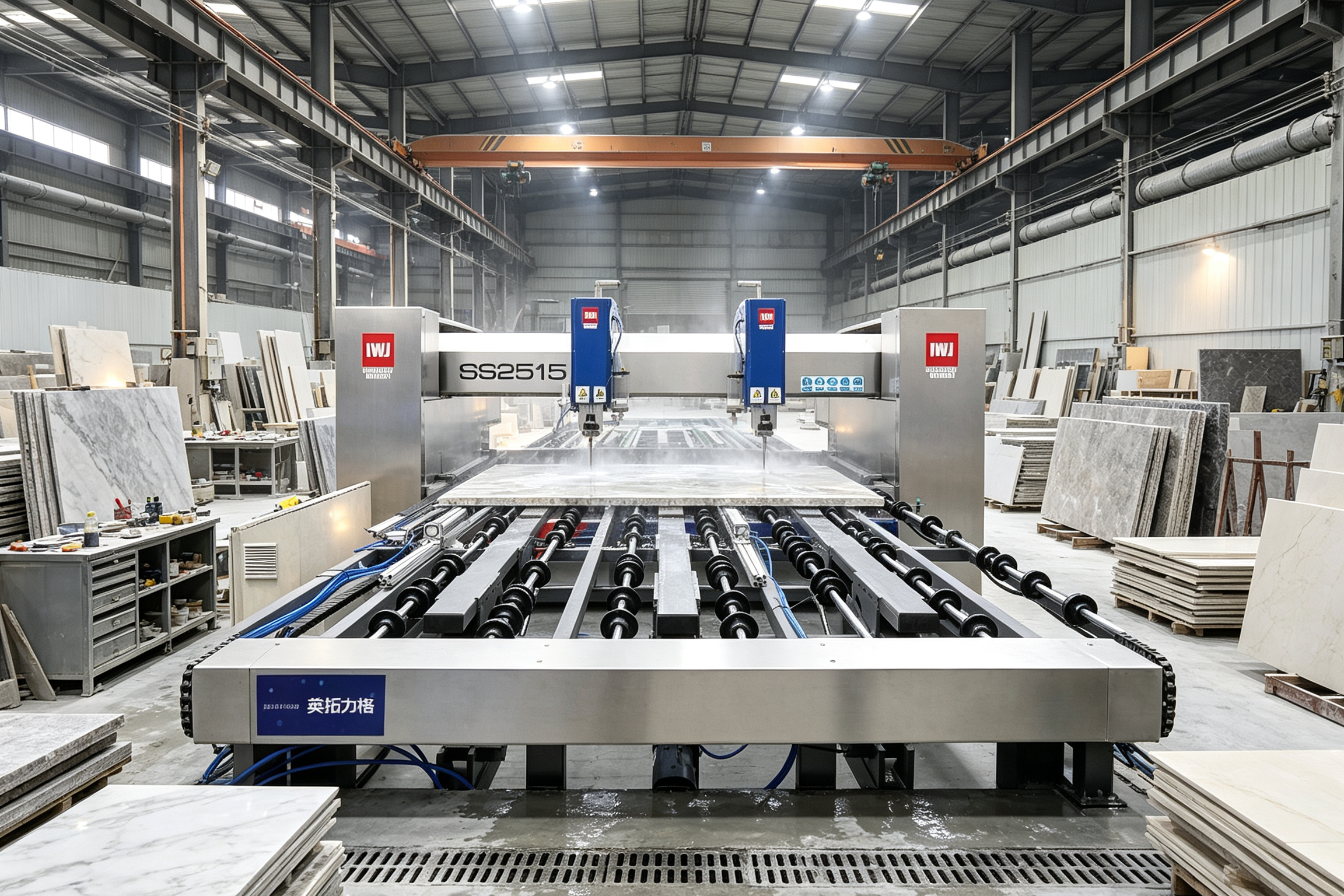
Waterjet cutting has become one of the most trusted manufacturing technologies for processing metals, stone, ceramics, composites, glass, and many other materials. Unlike thermal cutting methods, abrasive waterjet cutting produces no heat-affected zone, preserves material integrity, and delivers exceptional dimensional accuracy. While many factors influence cutting performance, material thickness is one of the most important variables affecting waterjet cutting speed. Whether manufacturers are cutting thin stainless steel sheets or thick granite slabs, understanding the relationship between thickness and cutting speed helps maximize productivity while maintaining high-quality results.
Understanding the Relationship Between Thickness and Cutting Speed
Material thickness directly determines how quickly a waterjet machine can move while still producing a clean and accurate cut. The deeper the abrasive waterjet must penetrate into a material, the longer it takes to remove material efficiently from top to bottom. As a result, cutting speed naturally decreases as material thickness increases.
This relationship exists because the high-pressure water stream gradually loses energy as it travels through the workpiece. The abrasive particles that perform the actual cutting continuously collide with the material surface, reducing their cutting effectiveness over distance. When cutting thin materials, the jet exits the workpiece quickly while retaining much of its energy. However, when processing thicker materials, the abrasive stream must travel farther, causing greater energy loss before reaching the bottom of the cut.
For manufacturers, this means thicker workpieces require slower feed rates to ensure complete material penetration and consistent edge quality.
Why Thicker Materials Require Slower Cutting Speeds
The primary reason thicker materials require slower cutting speeds is the gradual reduction in cutting power as the abrasive jet moves deeper into the material. Every abrasive particle fractures microscopic portions of the material surface while simultaneously wearing itself down. By the time these particles approach the bottom of a thick workpiece, they have distinctly less cutting capability than when they first entered the material.
If the machine travels too quickly across a thick plate, the abrasive stream may not have enough time to completely remove material near the bottom edge. This often results in rough surfaces, excessive taper, or incomplete separation.
Reducing the cutting speed allows the abrasive jet to maintain continuous material removal throughout the full thickness of the workpiece. Although this increases machining time, it greatly improves cut quality and dimensional accuracy while minimizing the risk of secondary finishing.
Material Type Also Influences Cutting Speed
While thickness plays a major role, different materials respond differently to waterjet cutting because of their unique physical properties. A 20 mm aluminum plate can typically be cut much faster than a 20 mm stainless steel plate because aluminum offers less resistance to the abrasive stream.
Similarly, natural stones vary considerably in machinability. Marble generally cuts faster than granite due to its lower hardness, while engineered stone may require slower cutting speeds because of its dense composition and resin content.
Composite materials present another challenge. Fiber-reinforced composites often require carefully optimized cutting speeds to prevent fiber pullout while maintaining clean edges. Glass and ceramics also benefit from slower cutting parameters, particularly when thicker sections are involved, as stable cutting reduces the risk of edge chipping.
Because every material behaves differently, manufacturers typically rely on cutting databases developed through extensive testing to determine the optimal feed rate for specific thicknesses.
The Impact on Edge Quality
Cutting speed has a direct influence on the final appearance and quality of the cut edge. When the feed rate is properly matched to material thickness, the abrasive stream produces smooth surfaces with minimal taper and excellent dimensional consistency.
However, increasing cutting speed beyond the recommended level often creates visible striations along the cut edge. The bottom portion of the cut becomes rougher because the abrasive particles no longer possess sufficient energy to remove material uniformly. In severe cases, the jet may fail to completely penetrate the workpiece, requiring additional processing or recutting.
For decorative stone fabrication, aerospace components, precision machinery parts, and architectural applications, superior edge quality is often more valuable than maximum production speed. Slowing the cutting process slightly can greatly reduce downstream polishing or machining operations, resulting in lower overall production costs.
Productivity Versus Precision
One of the biggest challenges in waterjet manufacturing is finding the right balance between cutting speed and finished part quality. Higher cutting speeds increase throughput and reduce cycle time, making them attractive for high-volume production. However, excessive speed often compromises edge finish, increases taper, and reduces dimensional accuracy.
Many modern waterjet systems allow operators to select different quality levels depending on production requirements. For rough cutting operations where additional machining is expected, faster feed rates can maximize productivity. Conversely, finished parts that require excellent surface quality or tight tolerances typically benefit from slower cutting speeds.
Understanding the intended application helps manufacturers determine whether productivity or precision should take priority. In many industries, achieving consistent quality provides greater long-term efficiency than simply maximizing cutting speed.
Equipment Performance Matters
Material thickness does not work alone. The capabilities of the waterjet machine itself have a clear influence on achievable cutting speeds.
Modern ultra-high-pressure pumps generate greater cutting energy, allowing operators to process thicker materials more efficiently than older systems. Stable pump pressure ensures the abrasive stream maintains consistent performance throughout the cutting process.
Abrasive delivery systems also play an important role. High-quality garnet abrasive with consistent particle size improves cutting efficiency while reducing nozzle wear. Likewise, properly maintained mixing tubes and orifices help preserve a focused abrasive stream, maximizing energy transfer into the material.
Advanced CNC control systems further enhance performance by automatically adjusting feed rates around corners, small features, and complex geometries. These intelligent controls improve both productivity and finished part quality when processing materials of varying thicknesses.
Optimizing Waterjet Cutting for Different Thicknesses
Successful manufacturers understand that optimizing waterjet cutting involves much more than selecting the fastest possible feed rate. Every cutting job should begin by identifying the material type, thickness, desired edge quality, and production volume.
Rather than relying on estimated cutting speeds, operators should use the manufacturer's cutting database or CAM software recommendations. These parameters are developed through extensive testing and provide an ideal balance between speed and cut quality.
Regular preventive maintenance is equally important. Replacing worn consumables before performance declines helps maintain stable cutting conditions and prevents unnecessary reductions in cutting speed. Consistent abrasive quality, proper pump maintenance, and accurate nozzle alignment all contribute to more efficient machining of thick materials.
Manufacturers processing thick steel plates, stone slabs, titanium, or composite materials should also consider investing in advanced waterjet systems equipped with automatic taper compensation and intelligent motion control. These technologies improve both productivity and accuracy while reducing material waste.
Conclusion
Material thickness is one of the most influential factors affecting waterjet cutting speed. As thickness increases, the abrasive waterjet naturally loses energy while traveling through the material, making slower feed rates necessary to maintain clean cuts and dimensional accuracy. Although reducing cutting speed increases machining time, it also improves edge quality, minimizes taper, and reduces the necessity for costly secondary finishing.
By understanding how thickness interacts with material properties, machine performance, abrasive quality, and cutting parameters, manufacturers can optimize every cutting operation for maximum efficiency. Choosing the correct cutting speed is not simply about working faster—it is about achieving the best possible balance between productivity, precision, and overall manufacturing cost. For companies seeking consistent, high-quality results across a wide range of materials, mastering the relationship between material thickness and waterjet cutting speed is essential to long-term success.
Recent Posts
- Invitation | DEFA TECHNOLOGY invites you to visit
- Foshan DEFA Technology Co., Ltd invites you to participate in the GLASSTEC Düsseldorf Glass Fair in Germany in 2024
- Foshan DEFA Technology Co., Ltd invites you to participate in the Glasstech Asia & Fenestration Asia in Indonesia in 2025
- Hannover MESse Shanghai 2024
- Cutting product display
SUBSCRIBE
INQUIRY