
Water Jet Stone Cutting: Achieve Superior Accuracy and Quality
Introduction: A New Era of Precision Stone Processing
The stone industry has always relied on advanced cutting technologies to turn natural materials into high-quality architectural and decorative products. From marble countertops and granite flooring to customized stone patterns and large-format slabs, modern projects require cutting solutions that deliver both exceptional precision and outstanding visual results. Traditional cutting methods, while effective for basic applications, often struggle with complex designs, material waste, and edge quality.
Water jet stone cutting has turned into an innovative technology that meets the growing demands of today’s stone fabrication industry. By using an ultra-high-pressure water stream combined with abrasive particles, water jet systems can cut various stone materials with incredible accuracy while preserving their original strength and appearance.
Unlike conventional mechanical or thermal cutting methods, water jet cutting is a cold cutting process that minimizes heat damage, reduces material loss, and enables manufacturers to create highly detailed designs. As a result, it has become a preferred solution for stone fabricators, architects, and manufacturers looking to achieve superior accuracy and quality.
How Does Water Jet Stone Cutting Work?
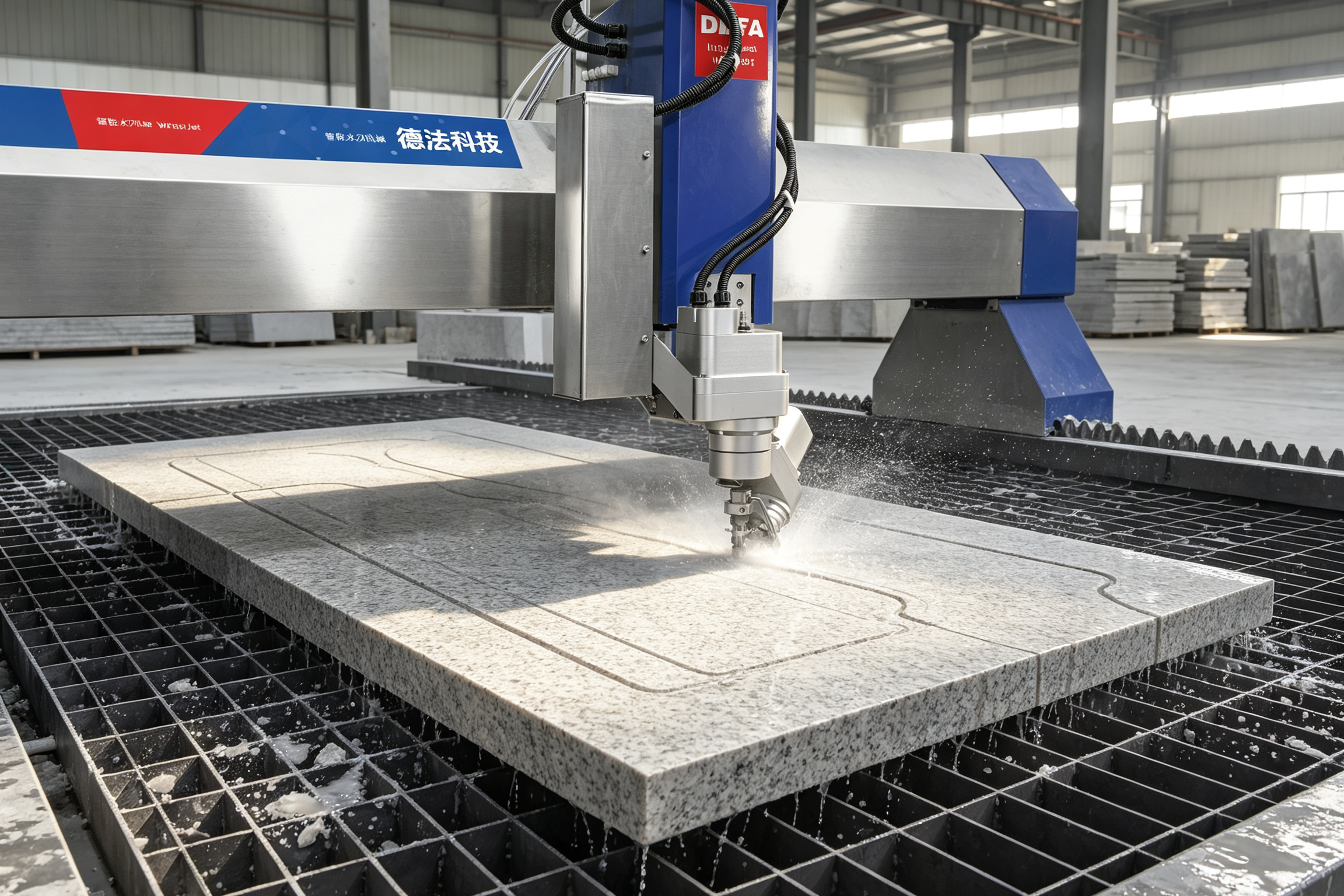
Water jet stone cutting uses the power of high-pressure water to precisely remove material along a programmed cutting path. During the process, water is pressurized through a small nozzle to create a powerful cutting stream. For hard stone materials such as granite and marble, abrasive particles like garnet are added to increase cutting performance and improve cutting efficiency.
The cutting head is controlled by a CNC system, which allows the machine to follow complex patterns and produce highly accurate shapes. Operators can upload digital drawings or CAD files, and the water jet machine automatically performs the cutting process with minimal manual intervention.
Because the cutting force comes from water pressure rather than heat or direct mechanical contact, the process avoids many common problems associated with traditional stone cutting. This makes water jet technology suitable for both delicate decorative projects and demanding industrial applications.
Exceptional Accuracy for Complex Stone Applications
One of the greatest advantages of water jet stone cutting is its ability to achieve outstanding accuracy. Modern water jet machines can create precise cuts with narrow kerfs, allowing manufacturers to produce complicated shapes and detailed patterns that are difficult to achieve with traditional equipment.
In architectural and interior design projects, customization has become increasingly important. Designers often require unique stone elements, including curved lines, geometric patterns, logos, and artistic inlays. Traditional saws may require multiple processing steps to complete these designs, while water jet cutting can produce complex shapes directly from digital designs.
This high level of precision helps reduce production errors and ensures that every stone component fits perfectly during installation. Whether processing a luxury hotel lobby, commercial building decoration, or custom residential project, water jet stone cutting provides the accuracy needed for premium results.
Superior Edge Quality Without Heat Damage
Edge quality plays a critical role in stone fabrication. Rough edges, cracks, or surface damage can affect both the appearance and durability of finished stone products. Traditional cutting methods often generate friction and heat, which may cause discoloration, micro-cracks, or additional finishing requirements.
Water jet stone cutting eliminates these concerns by using a cold cutting process. Since there is no heat generated during cutting, the natural properties of the stone remain unchanged. The result is smooth, clean edges that require less grinding and polishing after cutting.
For high-end applications such as stone countertops, wall panels, flooring designs, and decorative installations, superior edge quality helps achieve a flawless final appearance. It also reduces labor costs by minimizing secondary finishing operations.
Processing Different Types of Stone Materials
Another reason why water jet stone cutting is widely adopted is its ability to process a wide range of materials. Whether working with natural stone or engineered materials, water jet technology provides consistent cutting performance.
Common materials suitable for water jet stone cutting include marble, granite, limestone, travertine, quartz stone, ceramic slabs, and porcelain stone panels. Each material has different levels of hardness and structural characteristics, but water jet systems can adjust cutting speed, pressure, and abrasive flow to achieve optimal results.
This flexibility allows stone manufacturers to handle diverse customer requirements without investing in multiple cutting systems. A single water jet machine can support various applications, from simple straight cuts to highly customized stone designs.
Improving Material Utilization and Reducing Waste
Stone materials, especially natural stone, can be expensive and difficult to replace. Efficient material usage is therefore essential for improving profitability and reducing waste. Water jet stone cutting helps manufacturers maximize material utilization through precise cutting paths and advanced nesting software.
CNC water jet systems can optimize the arrangement of cutting patterns on stone slabs, allowing more components to be produced from each piece of material. This reduces leftover scraps and improves overall production efficiency.
In addition, because water jet cutting produces minimal cutting stress, it lowers the risk of damaging expensive stone materials during processing. This helps manufacturers save costs while maintaining high-quality production standards.
Environmentally Friendly Cutting Technology
Sustainability has become an important consideration across modern manufacturing industries, and stone processing is no exception. Water jet stone cutting provides several environmental advantages compared with traditional cutting technologies.
Since the process does not rely on heat, it produces no harmful fumes or thermal emissions. It also greatly reduces dust generation, creating a cleaner and safer working environment for operators.
Many advanced water jet machines are equipped with water recycling systems that help reduce water consumption. Combined with lower material waste and improved energy efficiency, water jet cutting represents a more sustainable approach to modern stone fabrication.
Applications of Water Jet Stone Cutting
Water jet stone cutting is used in a wide range of industries due to its precision, flexibility, and reliability. In architectural decoration, it is commonly used to create customized flooring patterns, decorative walls, and artistic stone features. Architects and designers can achieve unique visual effects by combining different stone colors, textures, and shapes.
In kitchen and bathroom manufacturing, water jet technology helps produce accurate countertops, sinks, vanity tops, and other custom stone products. The smooth cutting edges improve product appearance while reducing additional processing time.
For stone artwork and decorative projects, water jet cutting provides unmatched design freedom. Complex mosaics, company logos, and detailed patterns can be accurately reproduced with excellent consistency.
Industrial stone manufacturers also benefit from water jet systems because they provide automation, repeatable performance, and efficient production capabilities for large-scale orders.
Choosing the Right Water Jet Stone Cutting Solution
Selecting the right water jet cutting system is essential for achieving long-term production success. Manufacturers should consider factors such as machine accuracy, cutting speed, operating pressure, CNC control capabilities, and maintenance requirements.
A reliable water jet stone cutting machine should provide stable performance, easy operation, and compatibility with modern design software. Advanced features such as automatic height control, intelligent cutting optimization, and multi-axis cutting capabilities can further improve efficiency and expand application possibilities.
For companies processing various stone materials, investing in a flexible and high-performance water jet solution can help meet changing market demands and deliver better-quality products.
Conclusion: Water Jet Cutting Creates New Possibilities for Stone Fabrication
Water jet stone cutting has changed the way stone materials are processed by combining precision, efficiency, and design flexibility. Its ability to produce accurate cuts, smooth edges, and complex patterns makes it an ideal choice for modern stone fabrication.
Compared with traditional cutting methods, water jet technology reduces waste, protects material quality, and supports environmentally friendly production. As demand for customized and high-quality stone products continues to grow, water jet cutting will remain a key technology for manufacturers seeking superior accuracy and outstanding results.
By adopting advanced water jet stone cutting solutions, businesses can improve production efficiency, expand design capabilities, and deliver exceptional stone products for a wide range of applications.
Recent Posts
- Invitation | DEFA TECHNOLOGY invites you to visit
- Foshan DEFA Technology Co., Ltd invites you to participate in the GLASSTEC Düsseldorf Glass Fair in Germany in 2024
- Foshan DEFA Technology Co., Ltd invites you to participate in the Glasstech Asia & Fenestration Asia in Indonesia in 2025
- Hannover MESse Shanghai 2024
- Cutting product display
SUBSCRIBE
INQUIRY