
Waterjet Cutting for High-Precision Components
Introduction
Modern manufacturing demands increasingly higher levels of precision. From aerospace structures and medical devices to automotive parts and electronic components, manufacturers are expected to deliver products with tight tolerances, flawless edge quality, and consistent repeatability. As product designs become more complex and material selection continues to diversify, conventional cutting technologies often struggle to meet these requirements without compromising part quality.
Waterjet cutting has become one of the most trusted solutions for producing high-precision components across a wide range of industries. Unlike thermal cutting methods, it removes material using an ultra-high-pressure stream of water, often mixed with abrasive particles, allowing manufacturers to achieve accurate cuts without generating heat. The result is a machining process that protects material properties while delivering exceptional dimensional accuracy and surface quality.
Why Precision Matters in Modern Manufacturing
Precision is critical because even the smallest dimensional deviation can affect the performance, safety, and lifespan of a finished product. Components used in aircraft, medical equipment, semiconductor manufacturing, and precision machinery must fit together perfectly. A slight error in size or geometry may lead to assembly problems, increased wear, or even complete product failure.
Traditional cutting methods such as plasma, laser, or mechanical sawing can introduce thermal distortion, burrs, or internal stress that require additional machining after cutting. These secondary operations increase production time, labor costs, and material waste. Waterjet cutting eliminates many of these challenges by providing an accurate cold-cutting process that produces clean, ready-to-use parts directly from the machine.
How Waterjet Cutting Achieves High Precision
Waterjet cutting operates by forcing water through a tiny nozzle at pressures that can exceed 60,000 PSI. For hard materials such as stainless steel, titanium, ceramics, or stone, abrasive garnet is added to the water stream to enhance cutting performance. The extremely narrow cutting stream allows the machine to create highly detailed profiles while removing only a minimal amount of material.
Combined with advanced CNC motion control systems, waterjet machines can follow complex cutting paths with remarkable consistency. The cutting head moves precisely according to CAD/CAM programming, enabling manufacturers to reproduce complex parts repeatedly with minimal variation. Because there is almost no mechanical force applied to the workpiece, delicate or thin materials remain stable throughout the cutting process, resulting in excellent dimensional accuracy.
Maintaining Material Integrity with Cold Cutting Technology
Waterjet cutting is a completely cold cutting process. Since no heat is generated during machining, materials retain their original mechanical and chemical properties. This feature is especially valuable for industries where material performance cannot be compromised.
Heat-based cutting technologies often create heat-affected zones that can change hardness, introduce internal stress, or cause warping around the cut edge. These issues may reduce product reliability and require additional finishing processes. Waterjet cutting avoids these problems entirely, allowing manufacturers to process sensitive materials such as titanium alloys, aluminum, carbon fiber composites, engineering plastics, and hardened steels without affecting their structural integrity.
This capability makes waterjet cutting particularly attractive for manufacturers producing mission-critical components where quality and reliability are non-negotiable.
Superior Edge Quality Reduces Post-Processing
High-precision manufacturing is not only about dimensional accuracy but also about surface quality. Components with rough edges or excessive burrs often require grinding, polishing, or deburring before assembly, increasing production costs and extending manufacturing cycles.
Waterjet cutting naturally produces smooth, clean edges because the material is eroded rather than melted. The process leaves little or no burr formation, allowing many components to move directly into welding, coating, or final assembly without additional machining. Reducing secondary processing not only improves production efficiency but also lowers labor costs and minimizes the risk of dimensional changes caused by further finishing operations.
For manufacturers seeking lean production methods, this reduction in post-processing represents a distinct competitive advantage.
Cutting Complex Geometries with Confidence
Modern products frequently incorporate sophisticated designs that include narrow slots, sharp corners, tricky curves, and detailed internal profiles. Producing these features accurately using conventional machining methods can be difficult, particularly when working with hard materials or thick workpieces.
Waterjet cutting excels in these applications because the cutting stream remains extremely narrow and flexible. Advanced CNC systems enable precise movement along complicated toolpaths, making it possible to manufacture fancy shapes with exceptional consistency. Engineers can easily convert digital CAD drawings into finished components without investing in specialized tooling, making waterjet cutting an ideal solution for both prototype development and production manufacturing.
This flexibility also enables manufacturers to respond quickly to customer design changes without production delays.
Versatility Across a Wide Range of Materials
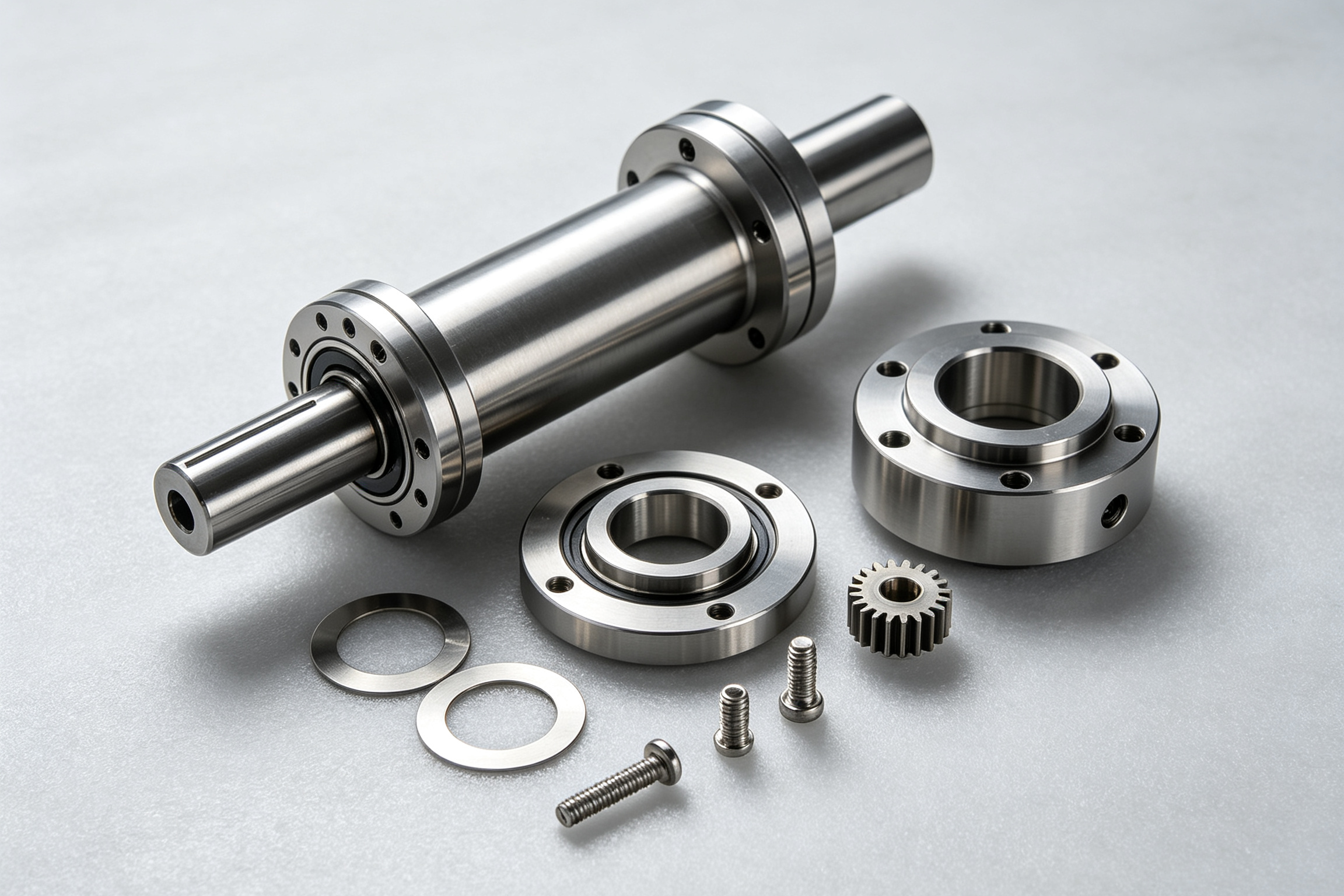
Another major reason manufacturers choose waterjet cutting for high-precision components is its exceptional material versatility. Unlike some cutting technologies that perform well only on specific materials, waterjet systems can process metals, composites, plastics, ceramics, glass, rubber, foam, and natural stone using the same equipment.
This flexibility simplifies production planning and allows manufacturers to consolidate multiple cutting operations into one machine. Whether producing stainless steel precision brackets, titanium aerospace components, marble architectural panels, or carbon fiber automotive parts, waterjet technology delivers consistent cutting quality without changing the fundamental cutting method.
For companies serving multiple industries, this versatility translates into greater production flexibility and improved equipment utilization.
Industries That Depend on Precision Waterjet Cutting
Waterjet cutting has become an essential manufacturing process across numerous high-value industries. Aerospace manufacturers rely on the technology to produce lightweight structural components while preserving the strength of expensive titanium and aluminum alloys. Medical equipment manufacturers use waterjet cutting to create precision surgical instruments and implant components that require flawless dimensional accuracy.
In the automotive industry, waterjet systems support prototype development, electric vehicle battery components, interior trim parts, and composite body panels. Electronics manufacturers benefit from the ability to accurately machine conductive metals, insulation materials, and delicate substrates without introducing thermal damage. Industrial machinery manufacturers also depend on waterjet technology for producing precision mechanical parts, heavy-duty equipment components, and custom machine elements that demand consistent quality.
Across all these industries, the common requirement is the ability to manufacture reliable, high-quality components while minimizing waste and production costs.
Improving Manufacturing Efficiency
Precision manufacturing is closely connected to production efficiency. The more accurate a cutting process is, the less time manufacturers spend correcting errors, replacing damaged materials, or performing secondary finishing operations.
Waterjet cutting contributes to overall manufacturing efficiency by reducing material waste through narrow kerf widths and optimized nesting software. The absence of dedicated tooling shortens product development cycles and allows manufacturers to produce custom parts or small production runs economically. In addition, modern CNC waterjet machines can operate continuously with excellent repeatability, ensuring stable production quality throughout long manufacturing schedules.
These advantages help manufacturers improve productivity while maintaining the high standards demanded by today's competitive global market.
Conclusion
As industries continue to demand tighter tolerances, higher product quality, and greater manufacturing flexibility, waterjet cutting has established itself as one of the most reliable technologies for producing high-precision components. Its ability to cut virtually any material without heat distortion, preserve material integrity, create superior edge quality, and manufacture complex geometries makes it an invaluable solution for modern manufacturing.
Whether producing aerospace components, medical devices, automotive parts, industrial machinery, or custom-engineered products, waterjet cutting offers manufacturers a powerful combination of accuracy, versatility, and efficiency. Investing in advanced CNC waterjet technology not only improves component quality but also reduces production costs, shortens lead times, and enhances long-term competitiveness in today's precision-driven manufacturing industry.
Recent Posts
- Invitation | DEFA TECHNOLOGY invites you to visit
- Foshan DEFA Technology Co., Ltd invites you to participate in the GLASSTEC Düsseldorf Glass Fair in Germany in 2024
- Foshan DEFA Technology Co., Ltd invites you to participate in the Glasstech Asia & Fenestration Asia in Indonesia in 2025
- Hannover MESse Shanghai 2024
- Cutting product display
SUBSCRIBE
INQUIRY