
Waterjet Cutting Technology: A Smart Manufacturing Solution for Modern Manufacturing
Manufacturers today face increasing pressure to produce high-quality components while reducing production costs, shortening lead times, and improving sustainability. As a result, many companies are replacing conventional cutting methods with more advanced manufacturing technologies. Among these innovations, waterjet cutting technology has become one of the most efficient and reliable solutions for precision fabrication.
Unlike laser, plasma, or flame cutting, waterjet cutting technology uses an ultra-high-pressure stream of water—often mixed with abrasive garnet—to cut materials without generating heat. This cold-cutting process eliminates heat-affected zones, preserves material properties, and delivers exceptional cutting accuracy across a wide range of materials. Whether manufacturing metal components, stone countertops, automotive parts, or aerospace components, businesses are increasingly relying on waterjet cutting technology to improve productivity and product quality.
What Is Waterjet Cutting Technology?
Waterjet cutting technology is a CNC-controlled cutting process that uses water pressurized to more than 60,000 PSI to slice through materials with remarkable precision. Depending on the material being processed, manufacturers can use either pure water or abrasive waterjet cutting. Pure water is ideal for soft materials such as rubber, foam, textiles, and plastics, while abrasive waterjet cutting is designed for harder materials including stainless steel, aluminum, titanium, glass, ceramics, marble, and granite.
The combination of ultra-high-pressure water and advanced CNC programming allows manufacturers to create complex shapes directly from CAD files with excellent repeatability. Unlike thermal cutting technologies, waterjet cutting technology produces no heat, meaning there is no warping, oxidation, discoloration, or structural damage to the workpiece. This unique advantage makes it suitable for industries where material integrity is critical.
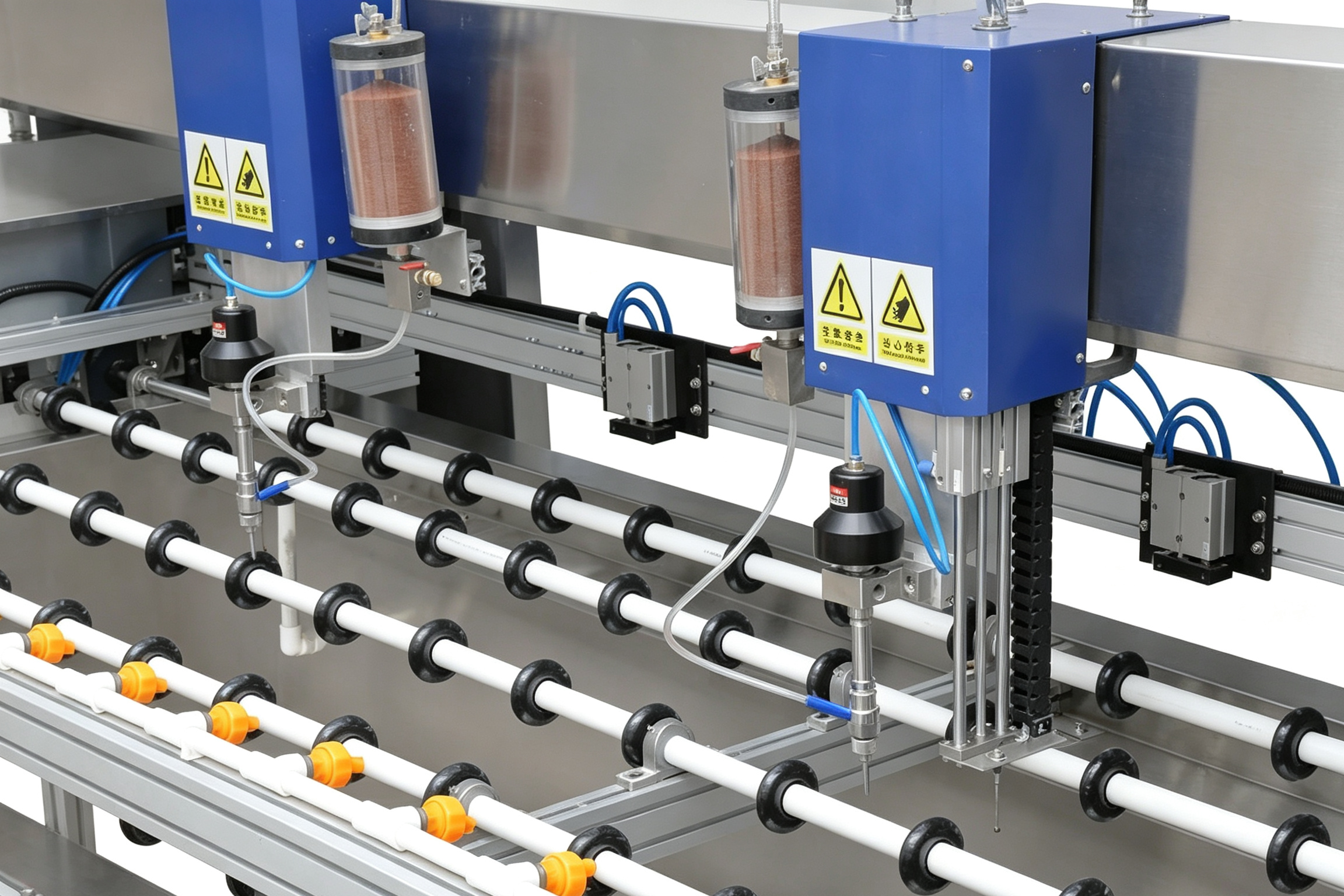
Why Waterjet Cutting Technology Is a Smart Manufacturing Solution
One of the primary reasons manufacturers invest in waterjet cutting technology is its ability to combine precision, flexibility, and efficiency in a single production system. Modern factories often process multiple materials for different customers, making versatility an essential competitive advantage.
A single CNC waterjet cutting machine can process metals, stone, composites, plastics, ceramics, glass, and rubber without changing cutting tools, reducing equipment investment while improving production flexibility. Manufacturers can respond quickly to custom orders, prototype development, and short production runs without purchasing multiple specialized machines.
Another important benefit is the superior edge quality. Because waterjet cutting technology uses a narrow cutting stream without heat, it produces smooth edges with minimal burrs. In many applications, components can move directly to assembly or finishing without additional grinding or machining, reducing labor costs and shortening production cycles.
High Precision for Complex Manufacturing
Precision manufacturing requires consistent dimensional accuracy, especially in industries such as aerospace, automotive, medical equipment, and industrial machinery. Waterjet cutting technology is capable of producing highly accurate components with tolerances as fine as ±0.1 mm, depending on machine configuration and material thickness.
Since the cutting process applies very little mechanical force to the workpiece, even delicate materials remain undamaged throughout production. Manufacturers can create fancy curves, sharp corners, internal cutouts, and complex geometries while maintaining excellent repeatability from the first part to the last.
Compared with traditional mechanical cutting, waterjet cutting technology also minimizes vibration and tool wear, ensuring stable production quality over long manufacturing cycles.
Waterjet Cutting Technology Supports Nearly Every Material
One of the strongest advantages of waterjet cutting technology is its exceptional material compatibility. Few manufacturing processes can handle such a wide variety of materials using a single machine.
Manufacturers commonly use waterjet cutting technology for stainless steel, carbon steel, aluminum, copper, brass, titanium, nickel alloys, marble, granite, quartz, porcelain, ceramic tiles, tempered glass, laminated glass, carbon fiber, fiberglass, engineering plastics, rubber, foam, wood, and composite materials.
Because one system can process nearly every industrial material, manufacturers gain greater flexibility while simplifying production planning. This capability is particularly valuable for fabrication shops that regularly receive customized projects involving multiple material types.
Industrial Applications of Waterjet Cutting Technology
The versatility of waterjet cutting technology has led to widespread adoption across numerous industries.
In metal fabrication, manufacturers use CNC waterjet cutting machines to produce machine parts, brackets, flanges, structural components, electrical enclosures, and precision sheet metal products. Since no heat is introduced during cutting, the finished components maintain their original mechanical properties.
The stone industry also benefits remarkably from waterjet cutting technology. Marble, granite, quartz, and engineered stone can be cut into detailed mosaics, countertops, flooring patterns, medallions, wall panels, and decorative architectural elements with exceptional accuracy. Designers appreciate the ability to produce tricky artistic patterns that are difficult to achieve with conventional bridge saws.
Automotive manufacturers rely on waterjet cutting for lightweight metals, interior insulation, rubber seals, composite materials, and prototype development. The flexibility of CNC programming enables fast product modifications without expensive tooling changes, making production more responsive to market demands.
In aerospace manufacturing, waterjet cutting technology is widely used for titanium alloys, aluminum, nickel-based alloys, and advanced composite materials. Because there is no heat-affected zone, manufacturers preserve the structural integrity required for high-performance aerospace components.
Glass manufacturers also use waterjet systems to produce decorative panels, architectural glass, and specialty products. The cold-cutting process minimizes cracking while producing smooth, accurate edges suitable for premium applications.
Improving Manufacturing Efficiency with Waterjet Cutting Technology
Manufacturing efficiency is no longer measured solely by cutting speed. Today's manufacturers evaluate overall production costs, material utilization, labor efficiency, and product quality. Waterjet cutting technology performs well in all of these areas.
Modern nesting software automatically arranges parts to maximize raw material utilization, reducing waste and lowering production costs. This is particularly important when processing expensive alloys or natural stone.
Because waterjet cutting produces clean edges, many components require little or no secondary finishing. Eliminating deburring, grinding, and polishing shortens production time while reducing labor requirements.
The digital nature of CNC waterjet systems also enables manufacturers to import CAD files directly into machine software. New products can be programmed within minutes, making waterjet cutting technology an excellent choice for quick prototyping, customized manufacturing, and small-batch production.
Sustainable Manufacturing with Waterjet Cutting Technology
Sustainability has become an important purchasing factor for manufacturers worldwide. Waterjet cutting technology supports environmentally responsible production by eliminating many of the emissions associated with thermal cutting.
The cold-cutting process generates no toxic fumes, smoke, or heat-related pollutants, creating a cleaner working environment for operators. High cutting precision also minimizes material waste, while optimized nesting software further improves resource utilization.
As governments and customers continue to prioritize environmentally friendly manufacturing, companies using waterjet cutting technology are better positioned to meet sustainability goals while maintaining high production standards.
Choosing the Right Waterjet Cutting Machine
Selecting the right waterjet cutting machine requires evaluating current production requirements and also future business growth.
Manufacturers should consider the types of materials they plan to process, maximum cutting thickness, required production capacity, CNC software capabilities, and pump reliability. A high-quality ultra-high-pressure pump ensures stable cutting performance and lower maintenance costs, while advanced CNC software simplifies programming and improves production efficiency.
Equally important is selecting an experienced waterjet machine manufacturer that provides installation support, operator training, spare parts, and responsive after-sales service. Reliable technical support helps maximize machine uptime and ensures long-term return on investment.
The Future of Waterjet Cutting Technology
As smart manufacturing continues to evolve, waterjet cutting technology is becoming more intelligent and automated. Modern CNC waterjet systems now integrate Industry 4.0 technologies, including intelligent process monitoring, predictive maintenance, AI-assisted cutting optimization, automated abrasive feeding, robotic material handling, and remote equipment management.
These innovations allow manufacturers to improve productivity, reduce downtime, and maintain consistently high cutting quality while lowering operating costs. As demand for customized production and precision manufacturing continues to grow, waterjet cutting technology will remain one of the most important solutions for advanced industrial production.
Conclusion
Waterjet cutting technology has changed modern manufacturing by combining precision, versatility, efficiency, and sustainability into a single cutting solution. Its ability to process virtually any material without heat damage enables manufacturers to achieve superior product quality while reducing waste, minimizing secondary processing, and improving overall production efficiency.
Whether producing aerospace components, automotive parts, architectural stone, industrial machinery, or precision metal products, investing in waterjet cutting technology provides manufacturers with a long-term competitive advantage. As Industry 4.0 continues to reshape global manufacturing, CNC waterjet cutting machines will remain an essential investment for companies committed to smart, efficient, and sustainable production.
Recent Posts
- Invitation | DEFA TECHNOLOGY invites you to visit
- Foshan DEFA Technology Co., Ltd invites you to participate in the GLASSTEC Düsseldorf Glass Fair in Germany in 2024
- Foshan DEFA Technology Co., Ltd invites you to participate in the Glasstech Asia & Fenestration Asia in Indonesia in 2025
- Hannover MESse Shanghai 2024
- Cutting product display
SUBSCRIBE
INQUIRY