
Why Is 5 Axis Waterjet Cutting Ideal for Complex Shapes?
Introduction
Modern manufacturing often requires components with tricky contours, beveled edges, internal cutouts, and multi-dimensional geometries. Traditional cutting methods can struggle to produce these complex shapes without multiple setups, additional machining, or compromised precision. This is where 5-axis waterjet cutting becomes a highly effective solution.
By combining high-pressure waterjet technology with advanced multi-axis motion control, a 5-axis waterjet cutting system can cut materials from different angles while maintaining exceptional accuracy. It allows manufacturers to create complex shapes efficiently, reduce material waste, and achieve high-quality edge finishes across a wide range of materials.
What Is 5 Axis Waterjet Cutting?
5-axis waterjet cutting is an advanced cutting process in which the waterjet nozzle can move along the X, Y, and Z axes while also tilting and rotating around two additional axes. This capability allows the cutting head to approach the workpiece from multiple angles, rather than being limited to vertical cuts.
The process uses a high-pressure stream of water, often mixed with abrasive particles, to cut through materials such as metal, stone, glass, composites, ceramics, and plastics. Because it is a cold cutting process, it does not generate heat-affected zones, making it suitable for materials that are sensitive to thermal distortion.
The Challenge of Cutting Complex Shapes
Complex shapes present several manufacturing challenges. Components with curves, undercuts, bevels, tapered edges, or three-dimensional profiles often require advanced machining techniques to achieve the desired geometry.
Conventional cutting methods may require multiple setups, secondary finishing operations, or specialized tooling to produce these features. This can increase production time, reduce accuracy, and raise overall manufacturing costs. In industries such as aerospace, automotive, architecture, and industrial equipment manufacturing, maintaining precision while producing complex shapes is essential.
How 5 Axis Waterjet Cutting Solves These Challenges
Multi-Angle Cutting Capability
The primary advantage of 5-axis waterjet cutting is its ability to cut at various angles. The tilting and rotating cutting head allows the system to create beveled edges, tapered surfaces, and difficult contours without repositioning the workpiece.
This capability is particularly valuable for parts that require precise edge preparation for welding, assembly, or decorative finishes. It also enables the production of shapes that would be difficult or impossible to achieve with a standard 2D cutting process.
Exceptional Precision and Accuracy
5-axis waterjet cutting systems are designed with advanced CNC control technology, enabling highly accurate movement along multiple axes. This precision ensures that even the most complex shapes are cut according to exact specifications.
The ability to maintain tight tolerances is especially important for industries that require high-performance components, such as aerospace and medical device manufacturing. Precise cutting also reduces the possibility of secondary machining, saving time and improving overall production efficiency.
Reduced Risk of Secondary Operations
Because the cutting head can approach the material from multiple angles, 5-axis waterjet cutting can often produce finished edges directly from the cutting process. Bevels, chamfers, countersinks, and complex edge profiles can be created in a single operation.
It reduces the risk of additional milling, grinding, or finishing processes. As a result, manufacturers can optimize production, reduce labor costs, and shorten lead times.
Advantages of 5 Axis Waterjet Cutting for Complex Shapes
Ability to Create Sophisticated Geometries
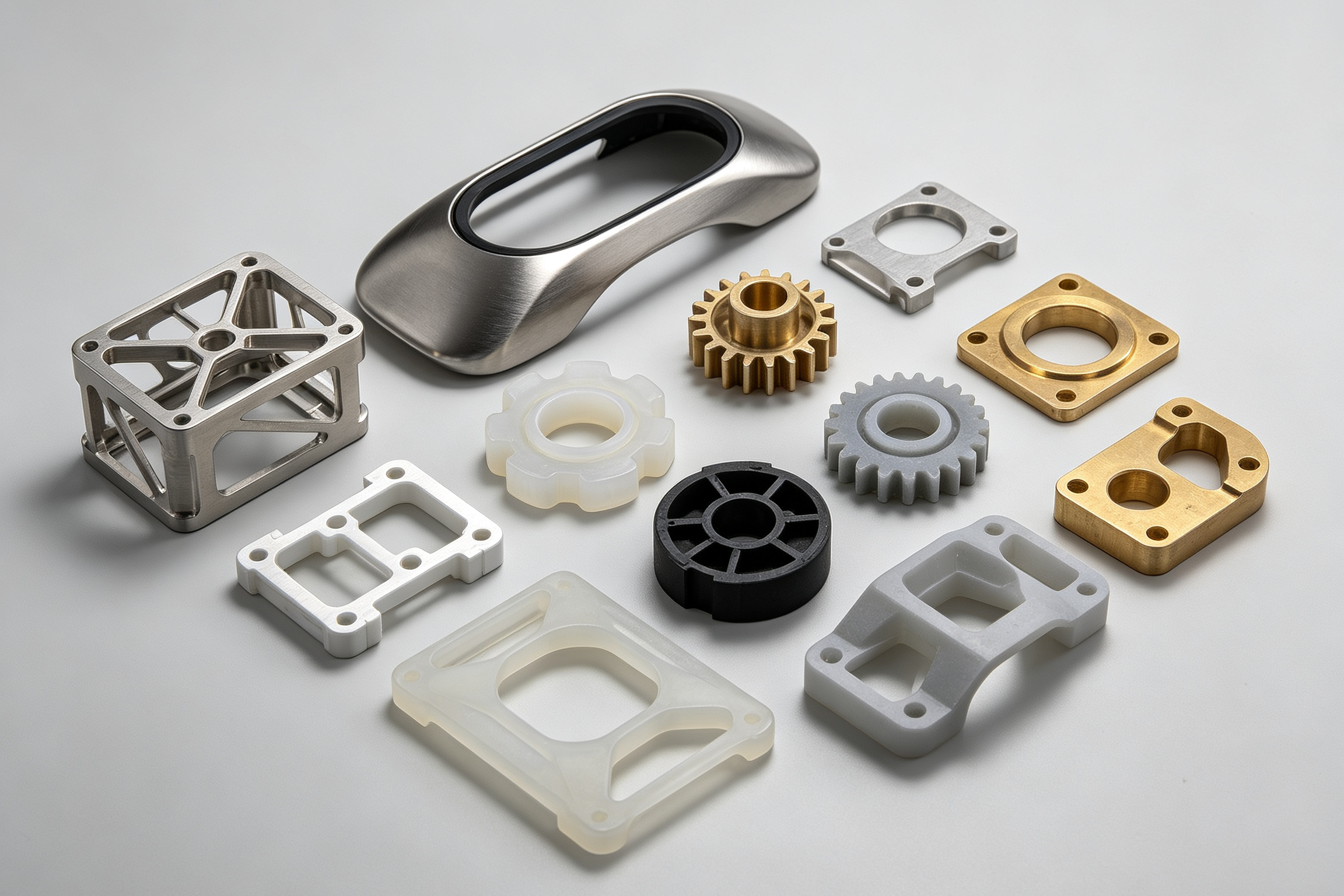
5-axis waterjet cutting excels at producing sophisticated geometries, including curved profiles, internal cutouts, and three-dimensional shapes. The flexible nozzle movement allows the cutting path to follow complex CAD designs with high precision.
This capability is particularly beneficial for custom fabrication projects, where each part may have unique dimensions or detailed design features.
Superior Edge Quality
The high-pressure waterjet produces smooth and clean edges, minimizing the step for post-processing. When cutting complex shapes, maintaining edge quality is essential because irregularities or rough surfaces can affect assembly, performance, or aesthetics.
The cold cutting nature of the process also prevents thermal distortion, preserving the integrity of the material and ensuring consistent edge quality.
Versatility Across Materials
One of the key strengths of 5-axis waterjet cutting is its ability to process a wide variety of materials. It can cut metals, stone, glass, ceramics, composites, rubber, and plastics without requiring different cutting tools for each material.
This versatility makes it an ideal choice for manufacturers working with diverse materials or producing complex components for multiple industries.
Material Preservation
Complex shapes often require expensive or difficult-to-replace materials. 5-axis waterjet cutting minimizes material waste by using narrow kerf widths and precise cutting paths. The absence of heat also prevents material degradation, preserving the mechanical properties of the workpiece.
For industries using high-value materials such as titanium, carbon fiber composites, or specialty alloys, this material preservation can result in huge cost savings.
Applications of 5 Axis Waterjet Cutting
Aerospace Industry
Aerospace components frequently require complex geometries, tight tolerances, and high-performance materials. 5-axis waterjet cutting is used to manufacture turbine components, structural parts, engine components, and custom aerospace assemblies.
The ability to cut sophisticated shapes without heat distortion is particularly important for maintaining the structural integrity of aerospace materials.
Automotive Manufacturing
In the automotive industry, 5-axis waterjet cutting is used to produce prototype parts, custom body panels, interior components, and precision-engineered parts. Its flexibility allows manufacturers to quickly adapt to design changes and produce complex components with high accuracy.
Architectural and Decorative Applications
Architectural projects often require decorative stone, glass, metal, or composite components with fancy patterns and unique shapes. 5-axis waterjet cutting enables the creation of artistic designs, curved surfaces, and detailed decorative elements while maintaining clean edges and precise dimensions.
Industrial Equipment Manufacturing
Industrial equipment manufacturers use 5-axis waterjet cutting to produce machine components, wear parts, tooling, and custom assemblies. The ability to create complex shapes in a single operation improves production efficiency and ensures consistent part quality.
Comparison with Other Cutting Methods
|
Feature |
5 Axis Waterjet |
Laser Cutting |
Plasma Cutting |
|
Complex shape capability |
Excellent |
Good |
Moderate |
|
Multi-angle cutting |
Yes |
Limited |
Limited |
|
Heat-affected zone |
No |
Yes |
Yes |
|
Material versatility |
Very high |
Limited by material |
Mainly conductive metals |
|
Edge quality |
High |
High |
Moderate |
Compared with laser and plasma cutting, 5-axis waterjet cutting offers superior flexibility for complex shapes and a broader range of material compatibility. Its cold cutting process also makes it advantageous for applications where thermal damage must be avoided.
Factors to Consider When Choosing 5 Axis Waterjet Cutting
When selecting a 5-axis waterjet cutting solution, manufacturers should consider several factors, including the types of materials being processed, required tolerances, part complexity, production volume, and machine capabilities.
A high-quality 5-axis waterjet cutting machine should offer precise CNC control, reliable abrasive delivery, durable machine construction, and advanced software for generating complex cutting paths. Choosing the right system ensures consistent performance and maximizes the benefits of the technology.
Conclusion
5-axis waterjet cutting is ideal for complex shapes because it combines multi-angle cutting capability, exceptional precision, material versatility, and high-quality edge finishes in a single process. Its ability to create tricky geometries without heat distortion makes it a valuable solution for industries that demand accuracy and reliability.
By reducing secondary operations, minimizing material waste, and enabling the production of sophisticated designs, 5-axis waterjet cutting helps manufacturers improve efficiency and maintain high product quality. For businesses seeking an advanced cutting solution for complex components, 5-axis waterjet technology offers a powerful combination of flexibility, precision, and performance.
Recent Posts
- Invitation | DEFA TECHNOLOGY invites you to visit
- Foshan DEFA Technology Co., Ltd invites you to participate in the GLASSTEC Düsseldorf Glass Fair in Germany in 2024
- Foshan DEFA Technology Co., Ltd invites you to participate in the Glasstech Asia & Fenestration Asia in Indonesia in 2025
- Hannover MESse Shanghai 2024
- Cutting product display
SUBSCRIBE
INQUIRY